25,298 people live in Old Town, where the median age is 35 and the average individual income is $98,112. Data provided by the U.S. Census Bureau.
Total Population
Median Age
Population Density Population Density This is the number of people per square mile in a neighborhood.
Average individual Income
Old Town is the rare Chicago neighborhood where you can walk from a 19th-century wood-frame cottage to a glass high-rise amenity deck in under ten minutes. It sits between Lincoln Park and the Gold Coast, close enough to the Loop for a twelve-minute Brown Line ride, and quiet enough on its interior streets that you'll hear birds over traffic.
What makes it unusual isn't just the age of the housing — plenty of North Side neighborhoods have vintage stock. It's that Old Town's core survived the Great Chicago Fire's aftermath in a way almost nothing else north of the river did, and then got protected by landmark designation before the teardown era could reach it. The result is a neighborhood with genuinely irreplaceable inventory sitting next to some of the newest luxury development in the city.
Buyers here tend to fall into two camps: people who want the historic single-family or rowhouse experience with a yard and no HOA, and people who want lock-and-leave high-rise living with a doorman and a pool. Both exist within a few blocks of each other, and the price gap between them is wide. Understanding which Old Town you're buying into matters more here than in most neighborhoods.
Old Town straddles two official community areas — the Near North Side and Lincoln Park — which is part of why its boundaries get described differently depending on who's drawing the map. In practice, the neighborhood runs from W. Armitage Avenue on the north down to W. Division Street on the south, with N. Clark Street and N. LaSalle Drive forming the eastern edge against the Gold Coast, and N. Halsted and N. Larrabee marking the western boundary toward the SoNo and former Cabrini area.
Within that footprint, three distinct sub-areas behave like separate markets:
The Old Town Triangle occupies the northern section — roughly Armitage to North Avenue, west of Clark. This is the historic district, with its non-grid street pattern, Crilly Court, St. Paul Avenue, and Willow Street. Almost entirely residential, almost entirely vintage.
The Wells Street Corridor runs north–south through the middle, mostly between North Avenue and Division. This is the commercial spine — restaurants, bars, boutiques, comedy clubs — with modern mid-rise and condo development layered above and behind the retail.
The Eastern Edge along LaSalle and Sedgwick is the density band. Sedgwick carries the Brown/Purple Line station. LaSalle is a tree-lined corridor of mid-century towers and newer condo buildings that functions as a transition zone into the Gold Coast.
A buyer looking at a Crilly Court rowhouse and a buyer looking at a LaSalle high-rise are shopping in the same neighborhood but almost entirely different markets — different price points, different carrying costs, different renovation rules.
The Triangle was designated a Chicago Landmark District in 1977. That designation is the reason the neighborhood still looks the way it does, and it's the single most important thing a buyer in that part of Old Town needs to understand before writing an offer.
Landmark status applies to exterior features visible from the public right-of-way — facades, original masonry, window profiles, doors, rooflines, stoops, porches, and cornices. It does not apply to your kitchen, your bathrooms, your floor plan, or your mechanicals. You can gut and modernize the interior of a Triangle home freely. Rear additions and decks not visible from the street also tend to face far fewer restrictions.
What the designation does control is the Commission on Chicago Landmarks approval process, which comes before standard city building permits for exterior work. In-kind repairs — repointing with matching mortar, replacing damaged wood trim with identical profiles, repainting — usually clear at staff level and move quickly. Structural alterations, rooftop additions, facade changes, and full window replacements go to formal Commission review, which realistically adds six to twelve-plus weeks to a project timeline.
Properties are classified as contributing (historic buildings from the district's period of significance, held to strict preservation standards) or non-contributing (newer infill or heavily altered buildings, still reviewed, but judged on whether new work respects the scale and rhythm of the block).
Three practical consequences for buyers:
Preservation-grade materials cost more. Custom wood windows, lime mortar, and matching historic brick are not vinyl-and-Home-Depot budgets. Build that into your renovation math before you close.
Teardowns of contributing structures are prohibited. That's a restriction on you — and a protection for you. Nobody is putting an out-of-scale six-flat next door.
Substantial historic-standard rehabilitation may qualify for the Illinois Property Tax Assessment Freeze for Historic Residences, which can freeze assessed value for eight years following a qualifying restoration. Worth exploring with a tax professional early, not after the work is done.
Old Town's housing reads like a timeline of Chicago residential construction.
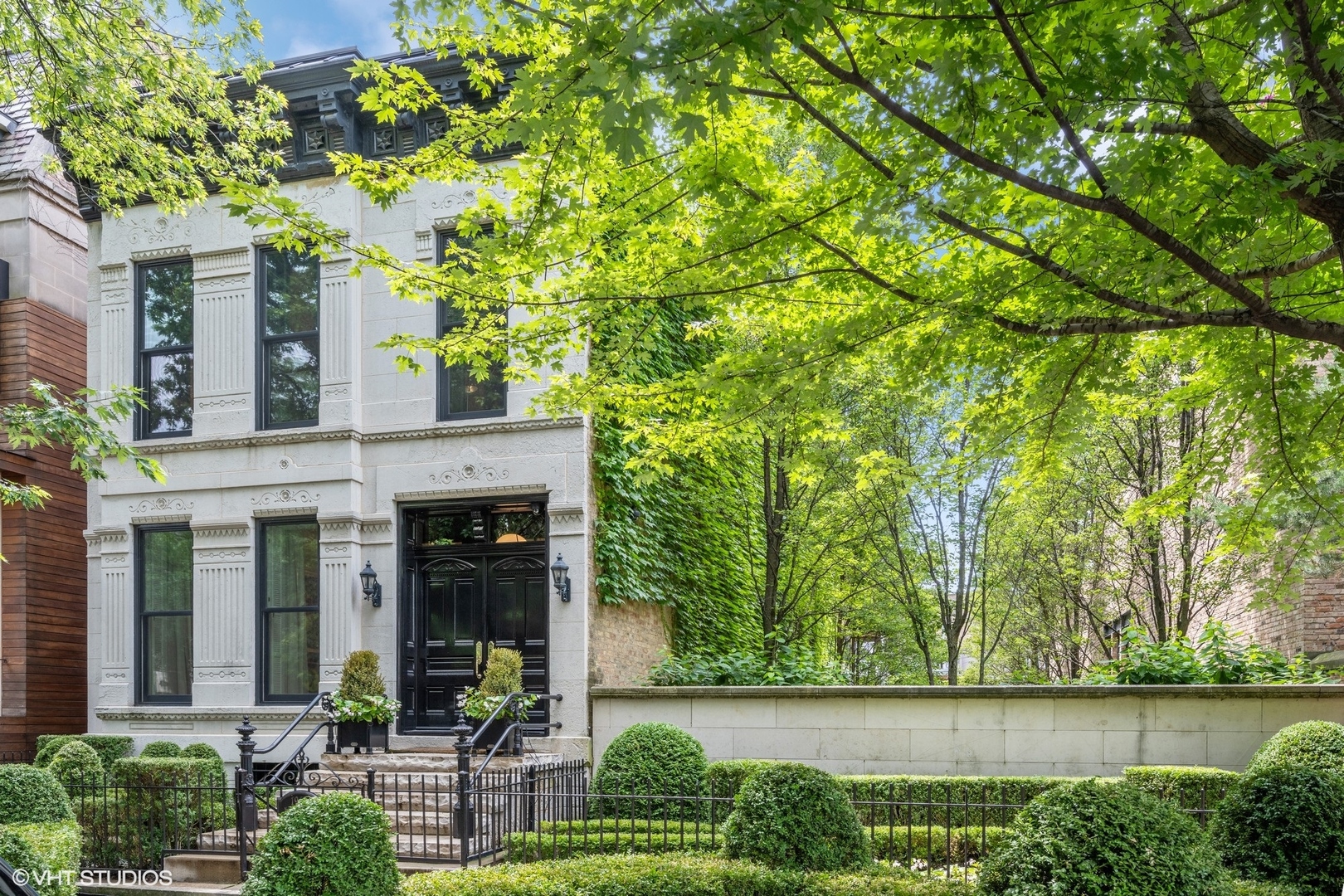
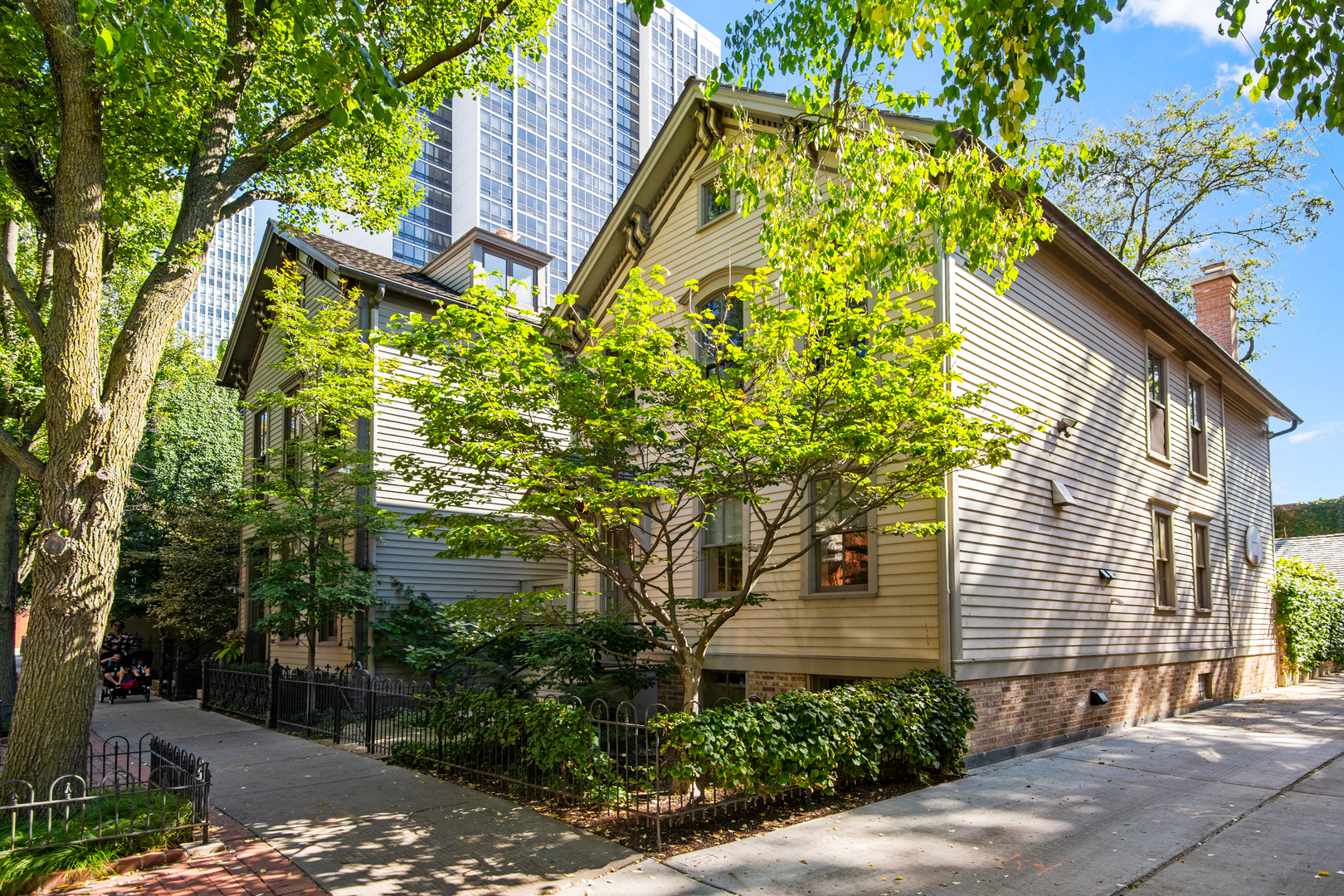
The oldest layer is the Victorian cottages and post-Fire frame homes of the 1870s and 1880s, concentrated in the Triangle. Wooden workers' cottages, Italianate brick cottages, and Queen Anne houses with gabled roofs, gingerbread trim, and raised stoops. Chicago banned wood-frame construction within the downtown limits after 1871, which is exactly why these survivors are so rare and why they command what they command.
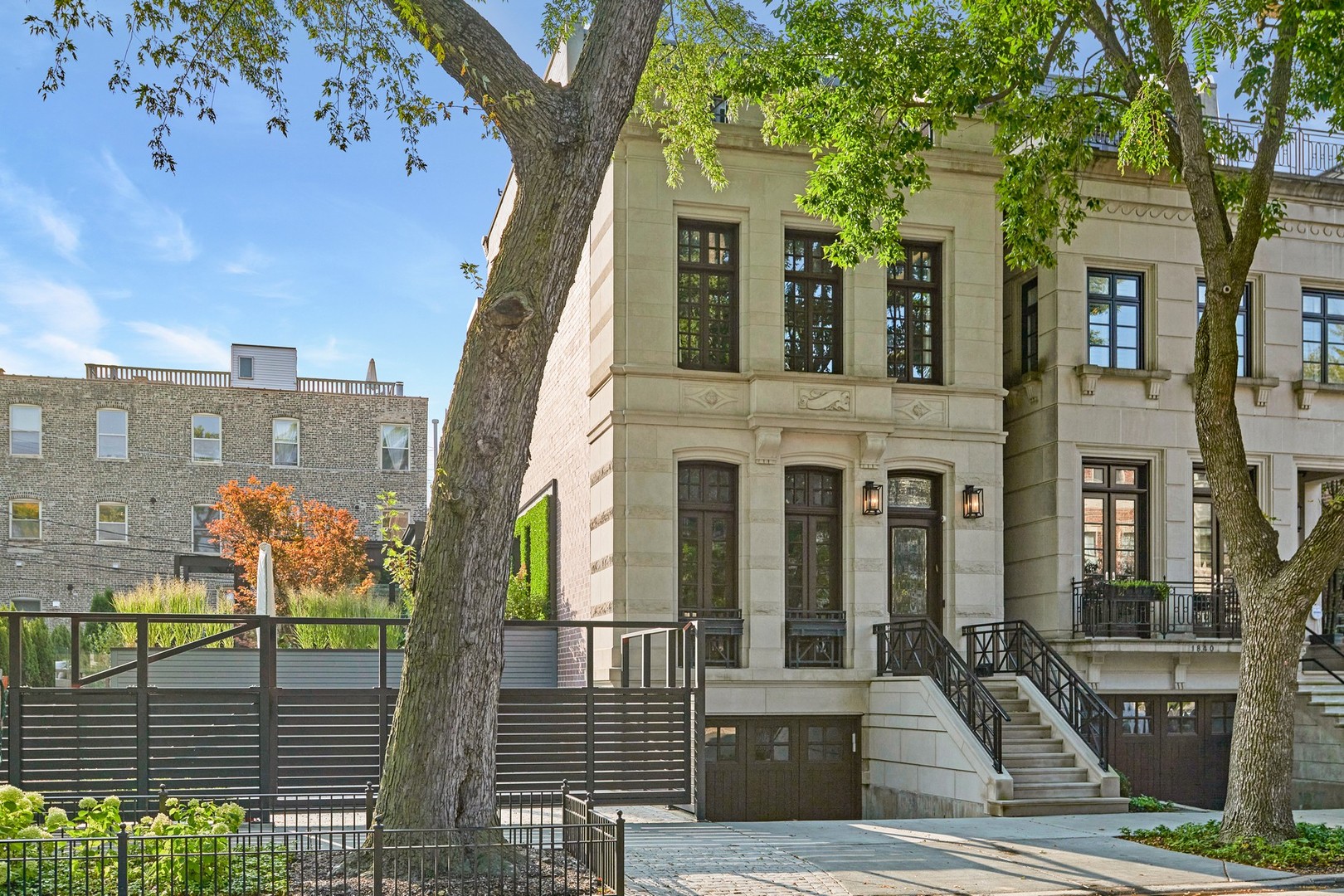
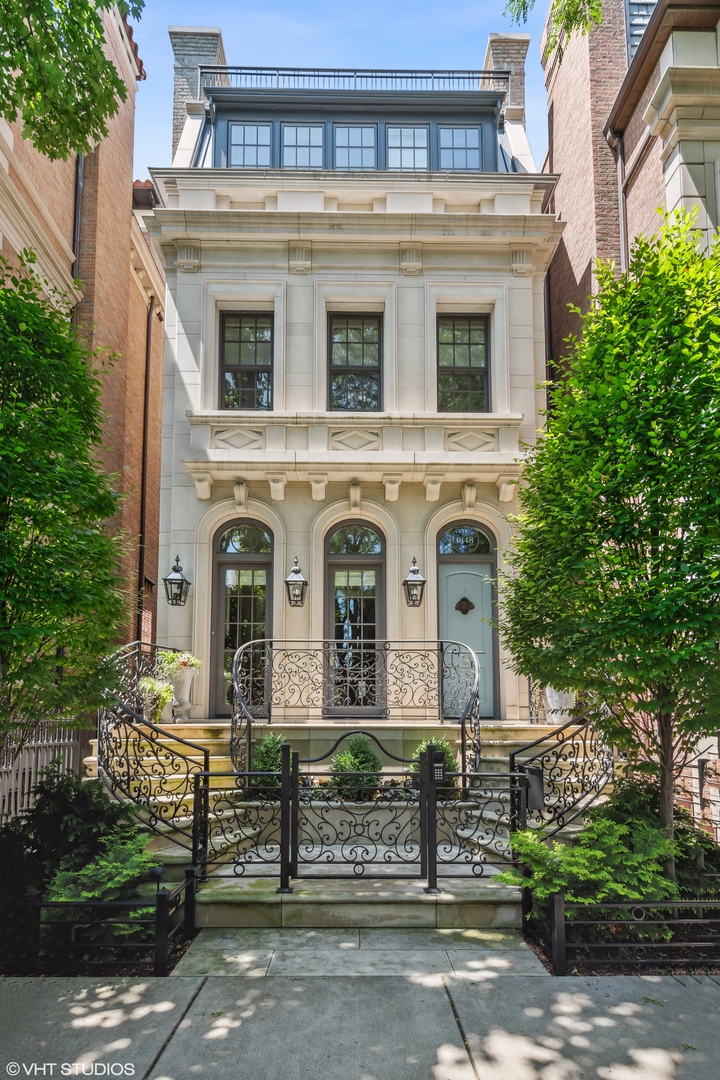
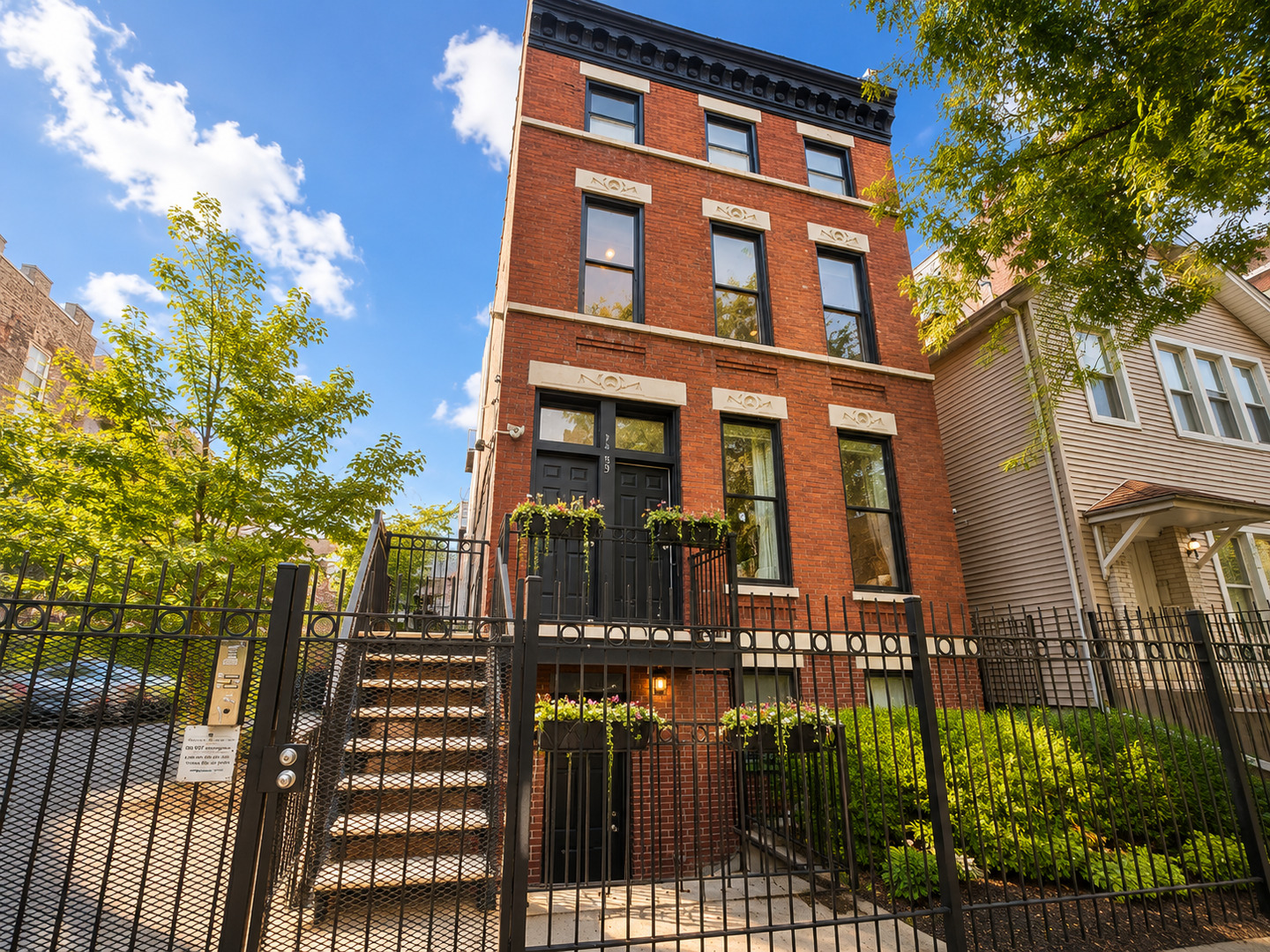
Next come the greystones and masonry two-flats built roughly 1890 to 1910, lining Sedgwick, Hudson, and Orleans. Indiana Bedford limestone over load-bearing brick, high-ceilinged parlors, bay windows, stone or copper cornices, raised basements. Many were originally two- and three-flats; a large share have since been deconverted into single-family homes, which is one of the more common value-add plays in the neighborhood.
Brick rowhouses and courtyard buildings fill in the gaps — Crilly Court and St. Paul Avenue being the marquee examples for rowhouses, with brick corbeling, limestone lintels, and wrought-iron gates. Courtyard buildings from the early-to-mid 20th century organize units around landscaped entry lawns for light and airflow, and they remain some of the better-value condo stock in the area.
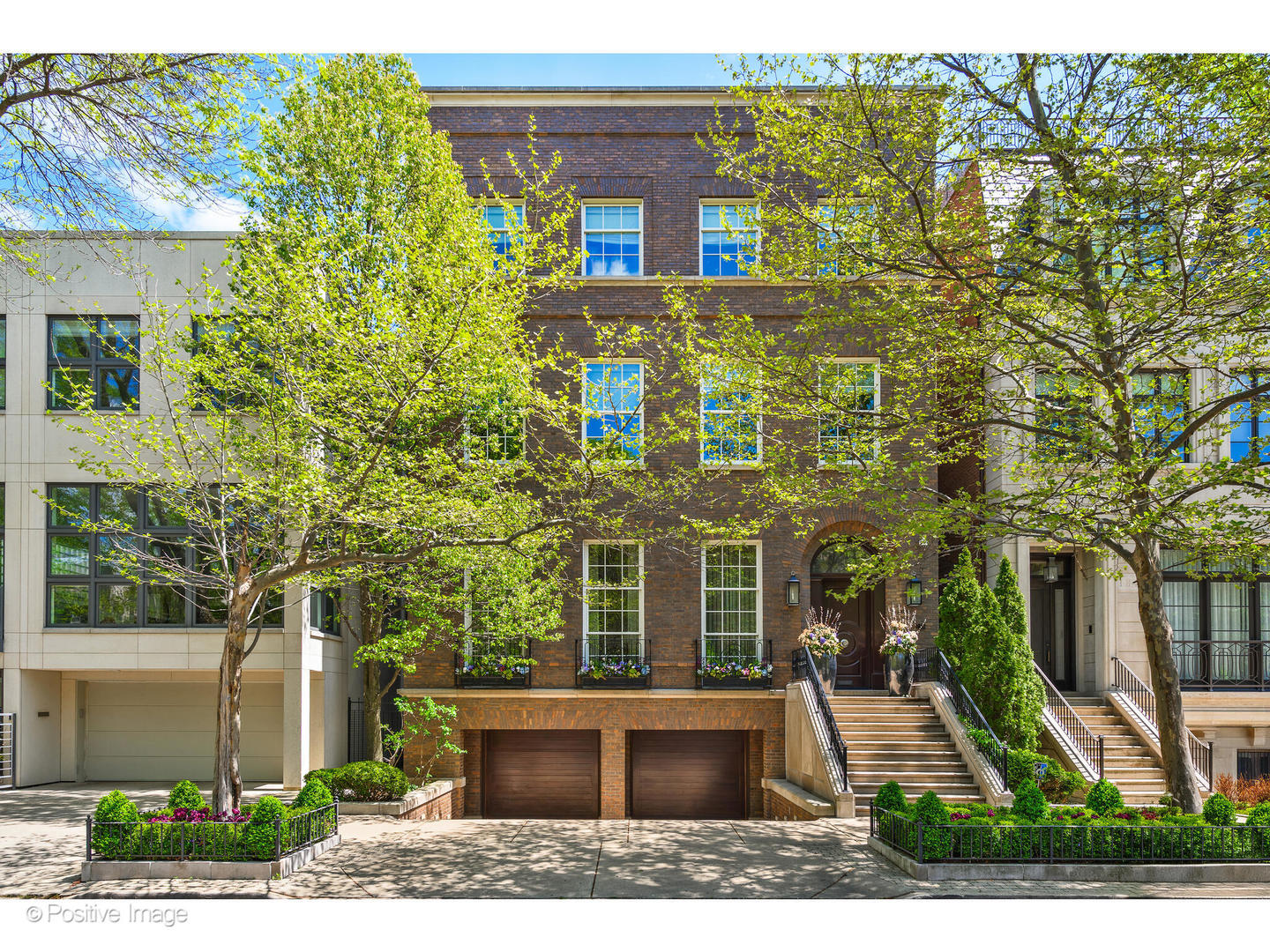
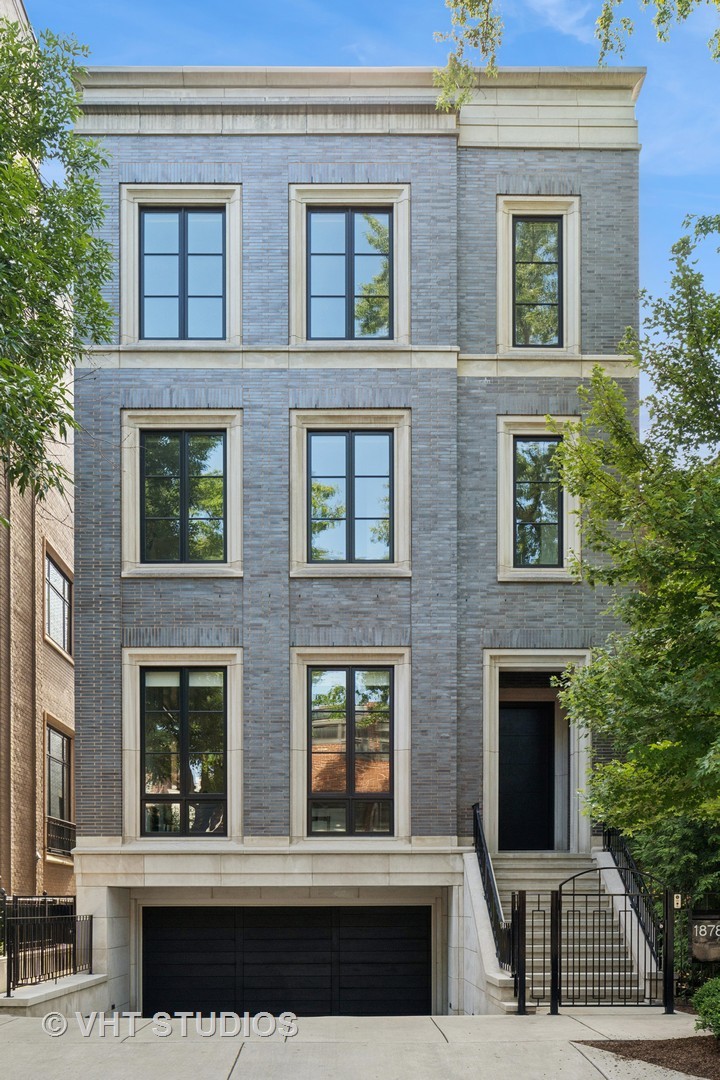
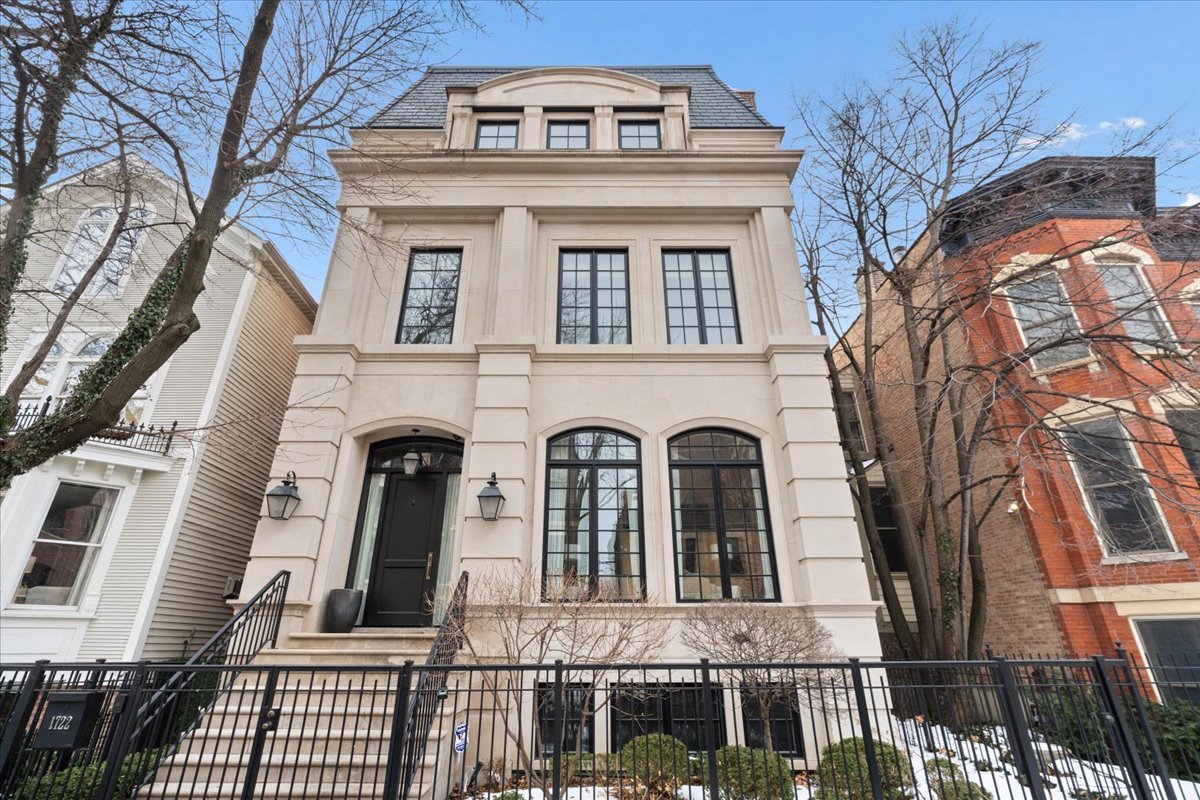
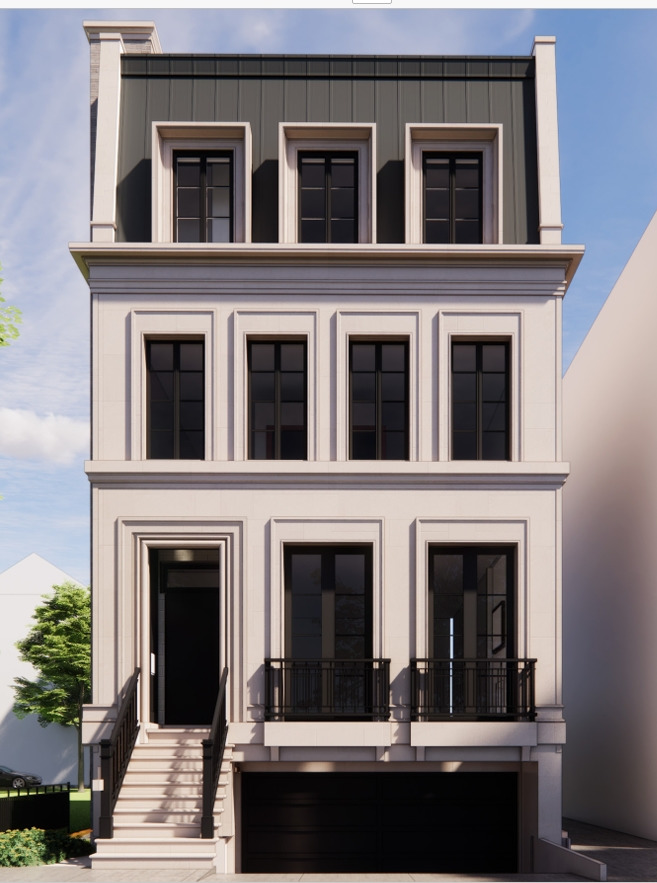
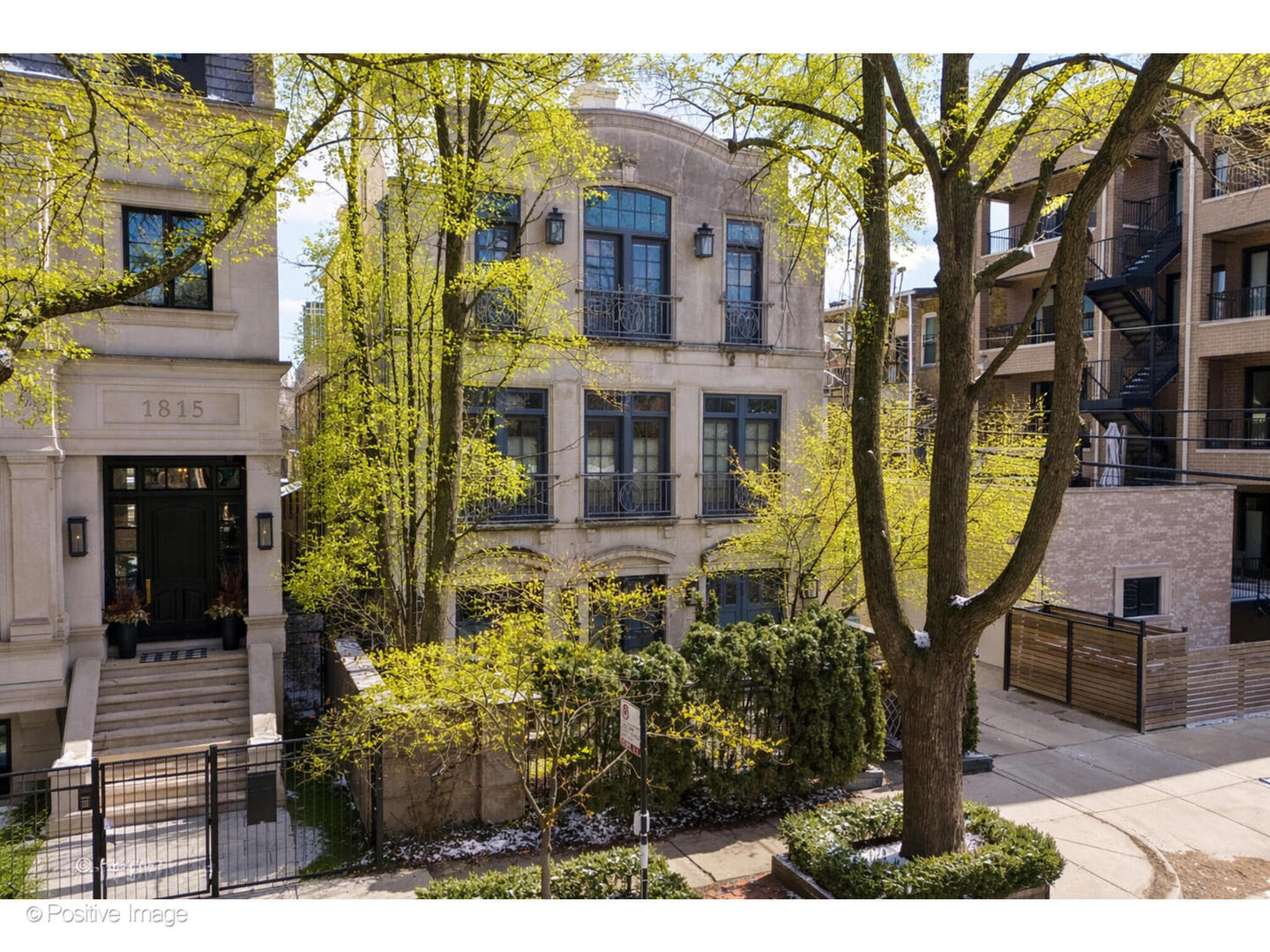
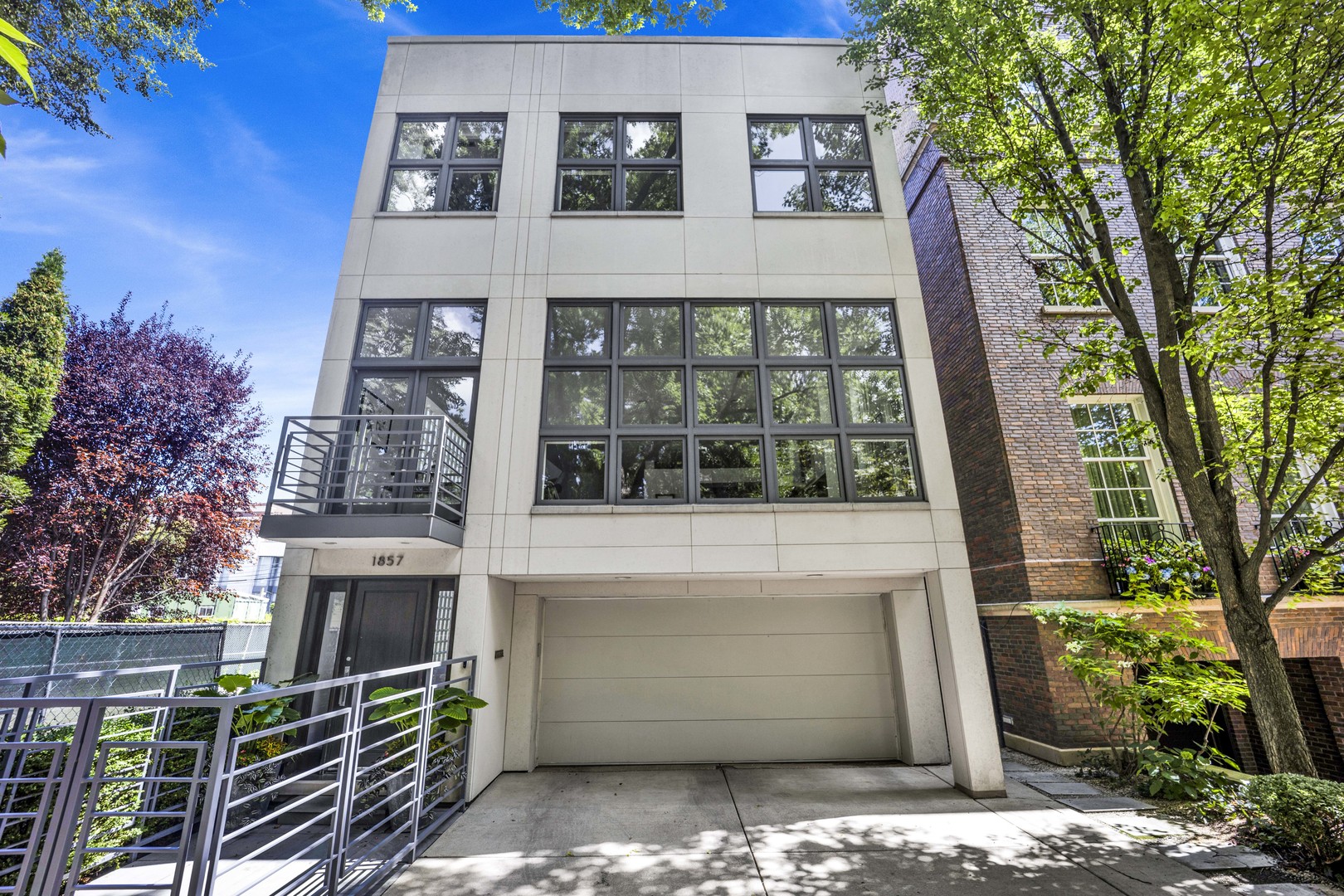
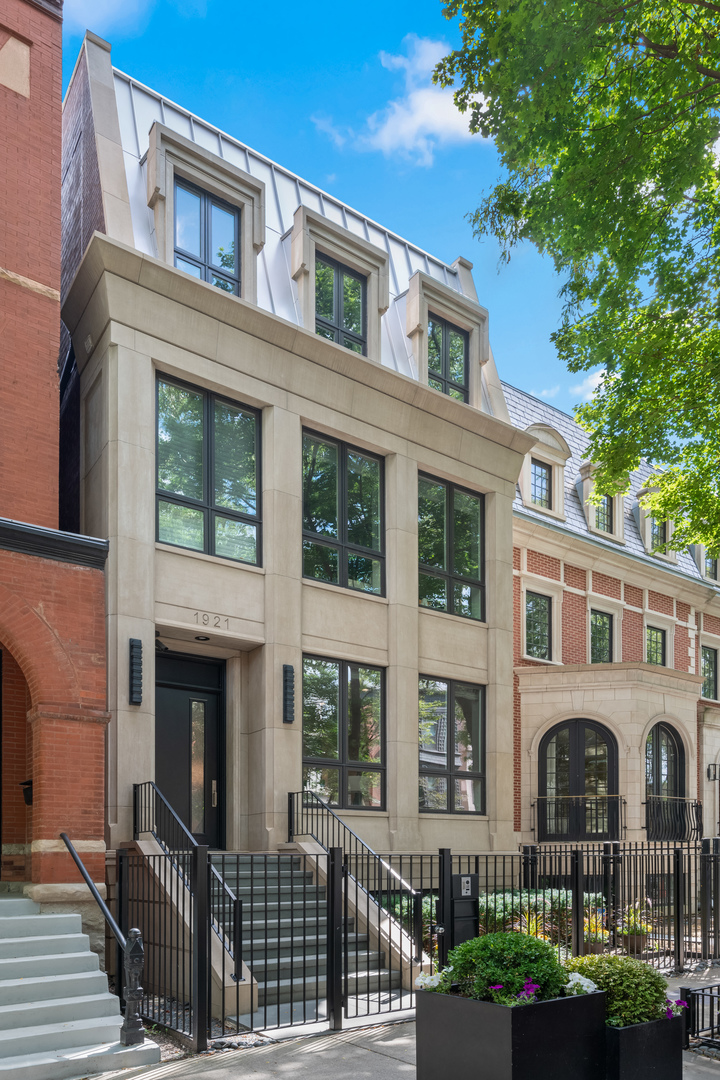
The newest layer is modern infill and high-rise, concentrated along Wells and the eastern perimeter. Contemporary single-family homes and three-to-five-story boutique condo buildings using brick, steel, and zinc cladding to stay in scale, plus mid-century towers like Sandburg Village and newer glass high-rises with door staff, rooftop pools, and garage parking.
Demand here is structurally strong — you're adjacent to Lincoln Park, the Gold Coast, the lakefront, and two CTA lines into the Loop. Supply is structurally tight, because there's almost no developable land left and single-family turnover is low. Condos make up the majority of what's actually listed at any given moment.
Property Type | Typical Range | What You're Getting |
|---|---|---|
High-rise / entry condos (1–2 bed) | $200,000 – $450,000 | Sandburg Village and LaSalle/Clark corridor towers; lowest entry point, but assessments carry a lot of the cost |
Boutique low-rise condos (2–3 bed) | $550,000 – $1,100,000 | Vintage conversions, modern infill three-flats, simplexes and duplex-downs on Wells, Sedgwick, Hudson |
Townhomes & historic rowhouses | $850,000 – $1,800,000 | Fee-simple or low-HOA; Crilly Court, multi-level brick and stone |
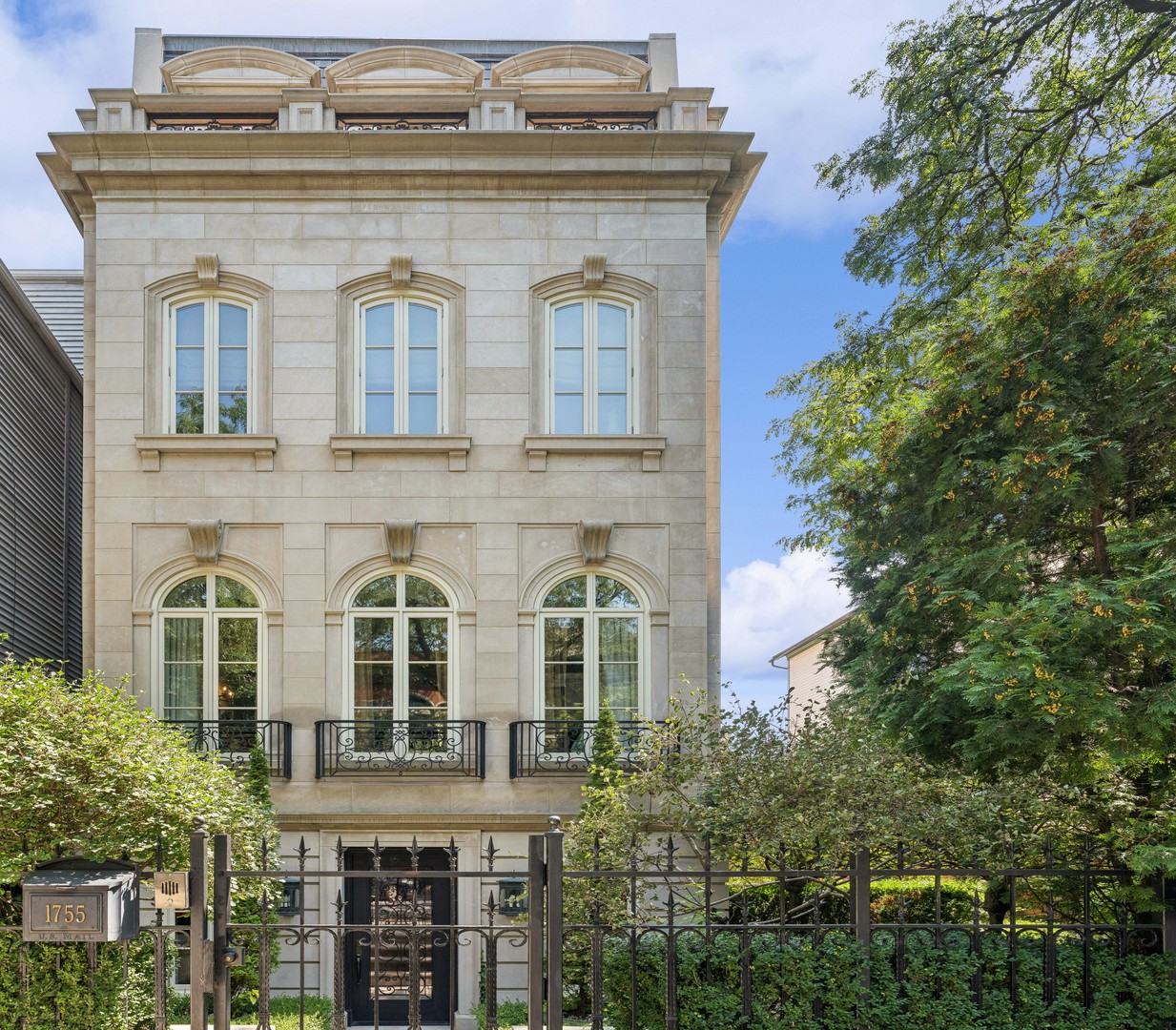
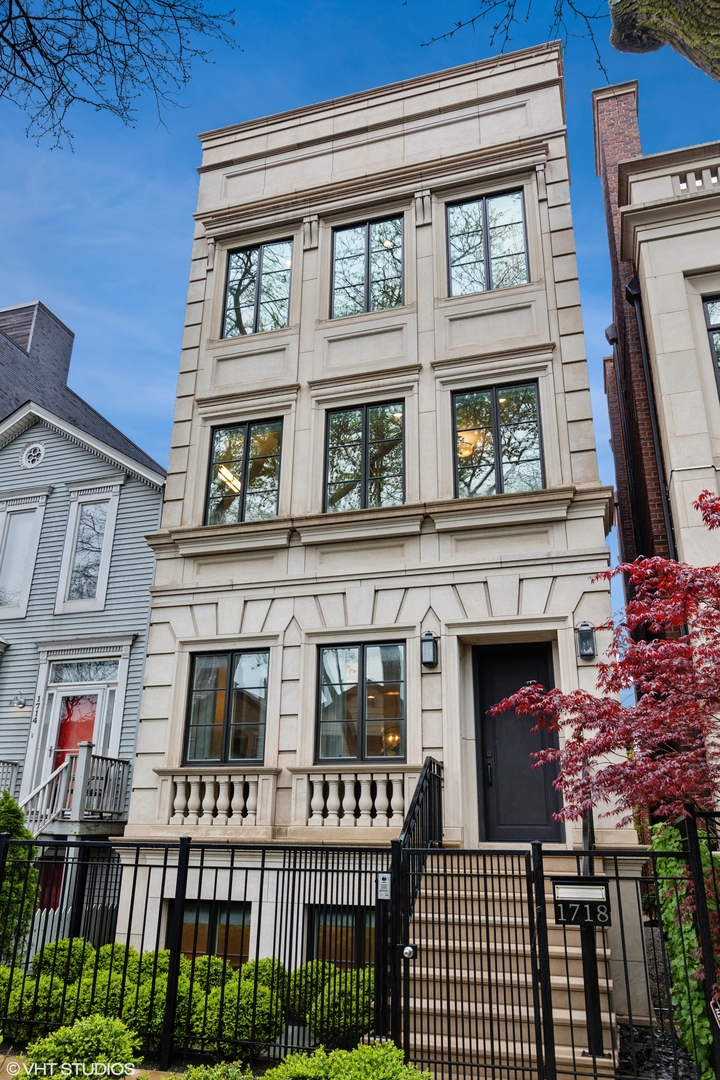
Single-family (renovated or new) | $1,500,000 – $4,500,000+ | Restored historic homes or modern rebuilds with private outdoor space and attached garages |
Ranges reflect general market patterns and move with conditions — ask us for current comps on a specific block or building.
What moves fastest: turnkey properties with updated kitchens and baths, real outdoor space, and deeded garage parking. Parking in particular is a disproportionate value driver here — a rowhouse with a garage and one without are not comparable properties.
Historic single-family homes that thread the needle — preserved exterior, opened-up modern interior, updated mechanicals — see the most competition at the top of the market. The hardest properties to sell are the ones stuck in between: partially renovated, dated systems, no parking.
On the condo side, buyers increasingly underwrite the association before the unit. Well-managed buildings with strong reserves trade at a premium over buildings with thin reserves and special-assessment risk, even when the units themselves are comparable.
The decision usually comes down to four variables: monthly carrying cost, control over the exterior, parking, and how much maintenance you want to own.
Monthly Assessments | Exterior Control | Typical Parking | |
|---|---|---|---|
Single-family | $0 | Full owner control (subject to landmark rules) | Private garage |
Townhome | ~$150–$400 | Partial / shared | Attached garage |
Boutique condo | ~$300–$600 | Board-managed | Exterior or garage |
High-rise | ~$600–$1,200+ | Association-managed | On-site garage |
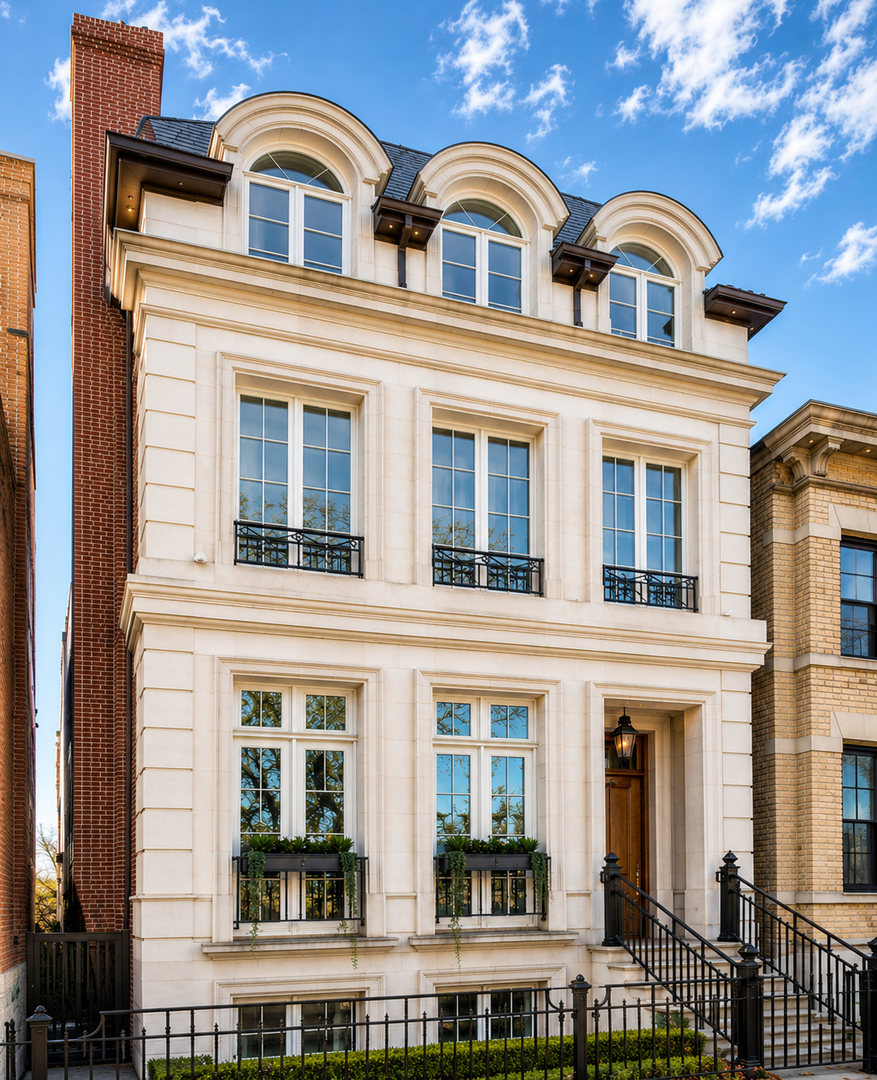
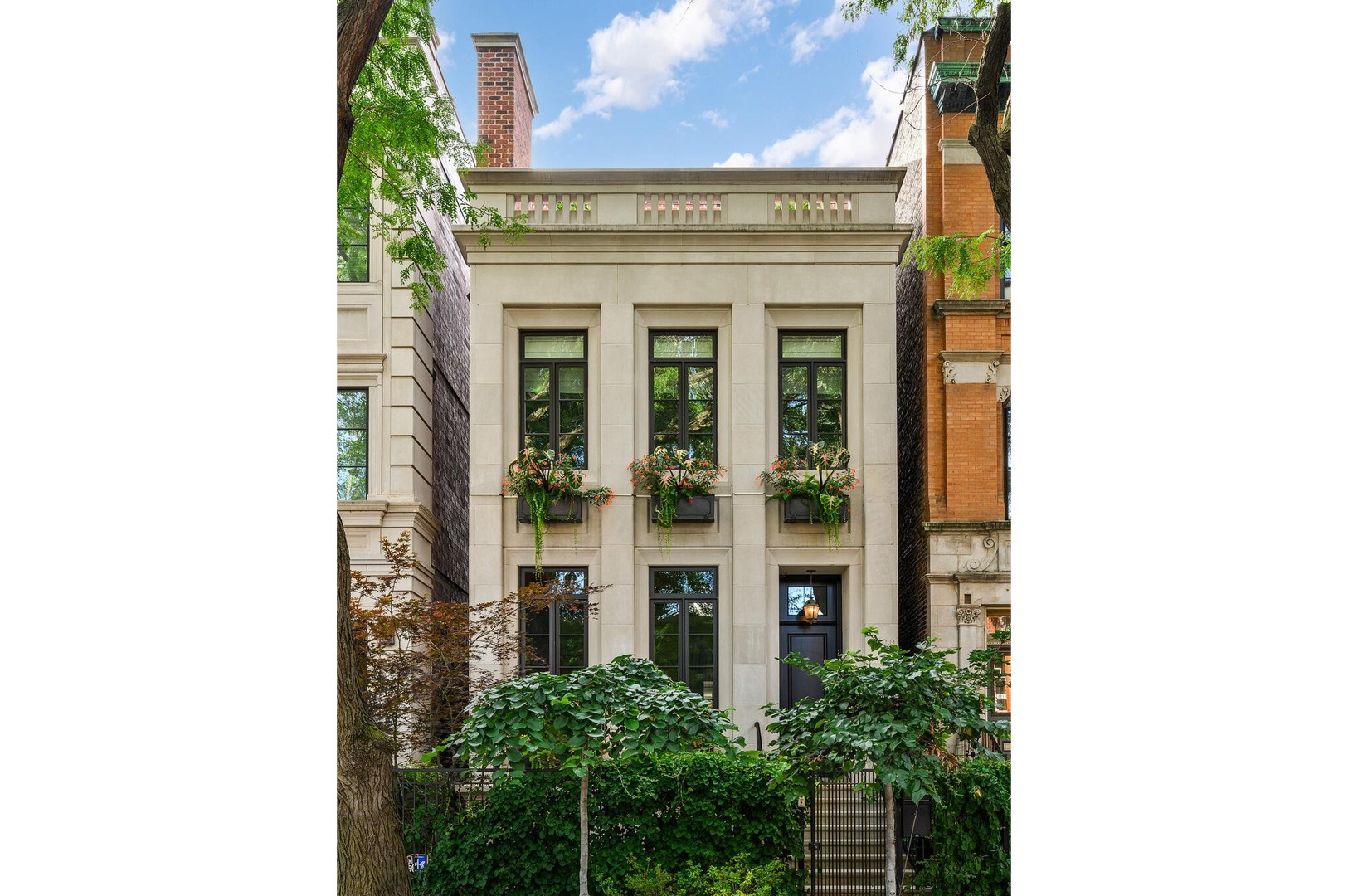
Single-family homes are the scarcest product in Old Town. You get 3,000 to 6,000-plus square feet, private outdoor space, often a rooftop deck over a detached garage, and no HOA or rental restrictions. You also absorb every roof, tuckpointing, and HVAC bill yourself — and inside the historic district, your exterior decisions run through the Commission.
Townhomes are the middle path: private ground-level entry, attached one- or two-car garage, vertical floor plans that naturally separate a home office from bedrooms, and modest assessments covering shared drives, landscaping, and roof and facade reserves. Look at the historic enclaves along Crilly Court, St. Paul, and 150 W. Eugenie, plus the newer clusters off Sedgwick and Orleans.
Condos split into two very different experiences. Boutique low- and mid-rises on Sedgwick, Wells, and Orleans offer larger vintage or infill floor plans, moderate assessments, and low-turnover neighbors — a genuinely residential feel. Full-amenity towers deliver door staff, fitness centers, pools, and skyline views, with assessments that reflect the staffing and infrastructure behind them.
Two developments worth knowing by name: Old Town Park at Wells and Hill, a multi-tower project at the neighborhood's south end with resort-scale amenity decks, and Eugenie Terrace at 1730 N. Clark, a 44-story tower on the Lincoln Park border with floor-to-ceiling glass, unobstructed lake and park views, and townhomes at its base.
Wells is the reason people who don't live in Old Town come to Old Town — and the reason residents rarely need to leave it.
Topo Gigio and Orso's anchor the Italian side of the street, both with patios that rank among the better outdoor dining in the city on a warm evening. Just off Wells on Tilden, Twin Anchors has been serving slow-cooked baby back ribs since 1932 and counted Frank Sinatra among its regulars — it's the kind of place that doesn't take reservations and doesn't need to.
The bar scene is broad rather than niche: neighborhood pubs, sports bars, wine rooms, and cocktail spots including The Fireplace Inn, Declan's, and Happy Camper keep the corridor busy seven nights a week. That's a genuine consideration for buyers — a unit directly above Wells retail lives differently than one two blocks west on Hudson. If noise sensitivity matters to you, visit on a Friday night before you commit.
Retail skews independent: boutiques, The Spice & Tea Exchange, florists, bakeries, specialty grocers, and a heavy concentration of boutique fitness and yoga studios at street level beneath the newer buildings.
Every June the corridor hosts the Wells Street Art Festival, running the same weekend as the Old Town Art Fair on the Triangle's residential streets — one of the oldest and most respected juried outdoor art fairs in the country. It's a great weekend to visit if you're evaluating the neighborhood, with the caveat that it's the least typical weekend of the year.
Old Town's cultural footprint is genuinely outsized, and it's not a marketing claim — it's documented history.
The Second City opened at 1616 N. Wells in December 1959 and effectively invented modern American sketch and improv comedy. The alumni list reads like a roster of the last sixty years of comedy: Alan Arkin, Joan Rivers, Harold Ramis, John Belushi, Gilda Radner, Bill Murray, Dan Aykroyd, Catherine O'Hara, John Candy, Chris Farley, Steve Carell, Stephen Colbert, Tina Fey. The complex today includes multiple stages, a training center, and workshops, and it still functions as a working pipeline rather than a museum.
Zanies, opened on Wells in 1978, is one of the longest continuously operating stand-up clubs in the country — a small brick room where the audience sits close enough to the stage to make it uncomfortable for the comic. Seinfeld, Leno, Tim Allen, and Colin Quinn all worked it early.
The Old Town School of Folk Music was founded on North Avenue in 1957 and pioneered a participatory, group-teaching approach that shaped folk education nationally. Alongside the long-gone Gate of Horn nightclub, it made Old Town a required stop for Pete Seeger, Big Bill Broonzy, Odetta, and Doc Watson during the folk revival. The school moved its main campus north to Lincoln Square in the 1990s, but the origin is here.
Old Town is dense, but it borders one of the largest urban parks in the country.
Lincoln Park — over 1,200 acres — begins just across Clark and Stockton. That puts the Lincoln Park Zoo (free, daily) and the Nature Boardwalk at South Pond within an easy walk, along with the Alfred Caldwell Lily Pool, a Prairie-style landscape masterwork that most Chicagoans have never visited, and Farm-in-the-Zoo.
Continue east across Lake Shore Drive and you reach the Lakefront Trail and North Avenue Beach. The Old Town stretch of the trail is one of the separated sections, with distinct paths for pedestrians and cyclists — a meaningful quality-of-life detail if you run or commute by bike. North Avenue Beach, with its ocean-liner beach house, volleyball courts, and kayak rentals, is the busiest beach in the city on a summer weekend and a five-minute walk from much of eastern Old Town.
For everyday recreation at the neighborhood's southern end, Seward Park at 375 W. Division has an indoor gym and rec center, a full artificial turf field used for soccer, softball, and flag football, basketball courts, a playground, and open lawn.
Transit access is one of Old Town's strongest and most underrated selling points.
Sedgwick Station at 1536 N. Sedgwick sits in the middle of the neighborhood and serves the Brown Line — roughly ten to twelve minutes to the Loop, and north through Lincoln Park, Lakeview, and Lincoln Square toward Kimball. During weekday rush hours, the Purple Line Express stops here too, running direct to Evanston and Wilmette. For North Shore commuters, that's a significant advantage over most city neighborhoods.
Clark/Division on the Red Line anchors the southeast corner with 24/7 service — south through River North and the Loop, north to Wrigleyville, Uptown, and Rogers Park.
Bus coverage fills in the rest. The #22 Clark and #36 Broadway/State are high-frequency north–south routes. The #156 LaSalle runs weekday commuters straight into the Financial District. The #72 North Avenue crosses east–west and terminates near North Avenue Beach. The #37 Sedgwick links south through River North toward the West Loop and Union Station.
Drivers get quick access to DuSable Lake Shore Drive and the LaSalle corridor, but street parking in the Triangle is tight and permit-zoned. If you drive daily, treat deeded or attached parking as a requirement rather than an upgrade — it's priced accordingly at resale.
Attendance boundaries in Old Town are genuinely split, so verify the specific address rather than relying on the neighborhood name.
On the public side, Lincoln Elementary (K–8) at 615 W. Kemper Place zones much of the northern portion of Old Town including the Triangle, and has long been one of the strongest neighborhood elementary schools in CPS — a boundary that measurably affects home values. Ogden International (K–12) serves parts of the southern and eastern edges with an International Baccalaureate program split across a Gold Coast elementary campus and a River North middle/high campus. Manierre Elementary (K–8) at 1420 N. Hudson serves the central and western residential grid. Lincoln Park High School at 2001 N. Orchard is the zoned high school for most Old Town addresses, with both a neighborhood track and a selective Honors/IB program.
Private and parochial options are unusually concentrated. Catherine Cook School (preschool–8) sits in the neighborhood at 226 W. Schiller, known for progressive curriculum and STEAM integration. The Latin School of Chicago (JK–12) at 59 W. North Avenue is among the Midwest's top independent college-prep schools. Immaculate Conception St. Joseph operates two neighborhood campuses, and St. Michael Parish School on Eugenie sits in the historic heart of the Triangle.
Boundaries and programs change. Confirm current attendance areas with CPS before making a purchase decision based on a specific school.
Old Town rewards buyers who know the block-by-block differences and punishes those who don't. A greystone on Hudson, a Crilly Court rowhouse, a duplex-down off Sedgwick, and a tower unit on LaSalle are four different investments with four different cost structures, resale profiles, and renovation realities. The landmark district adds a layer most Chicago neighborhoods don't have — one that protects your value long-term but shapes what you can do and how fast you can do it.
Second City Agents is a team of twelve Chicago brokers with deep roots across the North Side and the western suburbs, recognized as the #18 large team in Chicago by Real Trends in 2024 with nearly $90 million in closed 2025 sales. We work with first-time condo buyers, move-up families, and investors, and we bring the same aggressive, strategic approach and award-winning marketing to a $350,000 high-rise unit as to a $3 million Triangle restoration.
If you're considering Old Town — whether you want to tour Crilly Court, understand what an association's reserves actually mean for your offer, or find out what your current home would bring in today's market — reach out to Second City Agents to schedule a showing or a no-pressure conversation. We'll tell you what the listing photos won't.
Old Town has 13,478 households, with an average household size of 2. Data provided by the U.S. Census Bureau. Here’s what the people living in Old Town do for work — and how long it takes them to get there. Data provided by the U.S. Census Bureau. 25,298 people call Old Town home. The population density is 73,838 and the largest age group is Data provided by the U.S. Census Bureau.
Total Population
Population Density Population Density This is the number of people per square mile in a neighborhood.
Median Age
Men vs Women
Population by Age Group
0-9 Years
10-17 Years
18-24 Years
25-64 Years
65-74 Years
75+ Years
Education Level
Total Households
Average Household Size
Average individual Income
Households with Children
With Children:
Without Children:
Marital Status
Blue vs White Collar Workers
Blue Collar:
White Collar:
There's plenty to do around Old Town, including shopping, dining, nightlife, parks, and more. Data provided by Walk Score and Yelp.
Explore popular things to do in the area, including Synergize Chicago, Peaches’ Sweets And Something More, and Evergreen Food Mart.
| Name | Category | Distance | Reviews |
Ratings by
Yelp
|
|---|---|---|---|---|
| Dining | 0.1 miles | 0 reviews | 0/5 stars | |
| Dining | 0.1 miles | 0 reviews | 0/5 stars | |
| Dining | 0.28 miles | 0 reviews | 0/5 stars | |
| Active | 0.1 miles | 0 reviews | 0/5 stars | |
| Active | 0.1 miles | 0 reviews | 0/5 stars | |
| Active | 0.16 miles | 0 reviews | 0/5 stars | |
| Active | 0.45 miles | 0 reviews | 0/5 stars | |
| Active | 0.46 miles | 8 reviews | 5/5 stars | |
| Active | 0.46 miles | 3 reviews | 5/5 stars | |
| Active | 0.49 miles | 0 reviews | 0/5 stars | |
| Active | 0.54 miles | 0 reviews | 0/5 stars | |
| Nightlife | 0.5 miles | 332 reviews | 4.2/5 stars | |
| Beauty | 0.13 miles | 1 review | 1/5 stars | |
| Beauty | 0.17 miles | 0 reviews | 0/5 stars | |
| Beauty | 0.31 miles | 0 reviews | 0/5 stars | |
| Beauty | 0.38 miles | 0 reviews | 0/5 stars | |
| Beauty | 0.52 miles | 0 reviews | 0/5 stars | |
| Beauty | 0.53 miles | 1 review | 5/5 stars | |
|
|
||||
|
|
||||
|
|
||||
|
|
||||
|
|
||||
|
|



Compass
1643 N Milwaukee Ave, 1st Floor
Chicago, IL 60647
Hinsdale Office
1 Grant Square
Hinsdale, IL 60521
Second City Agents