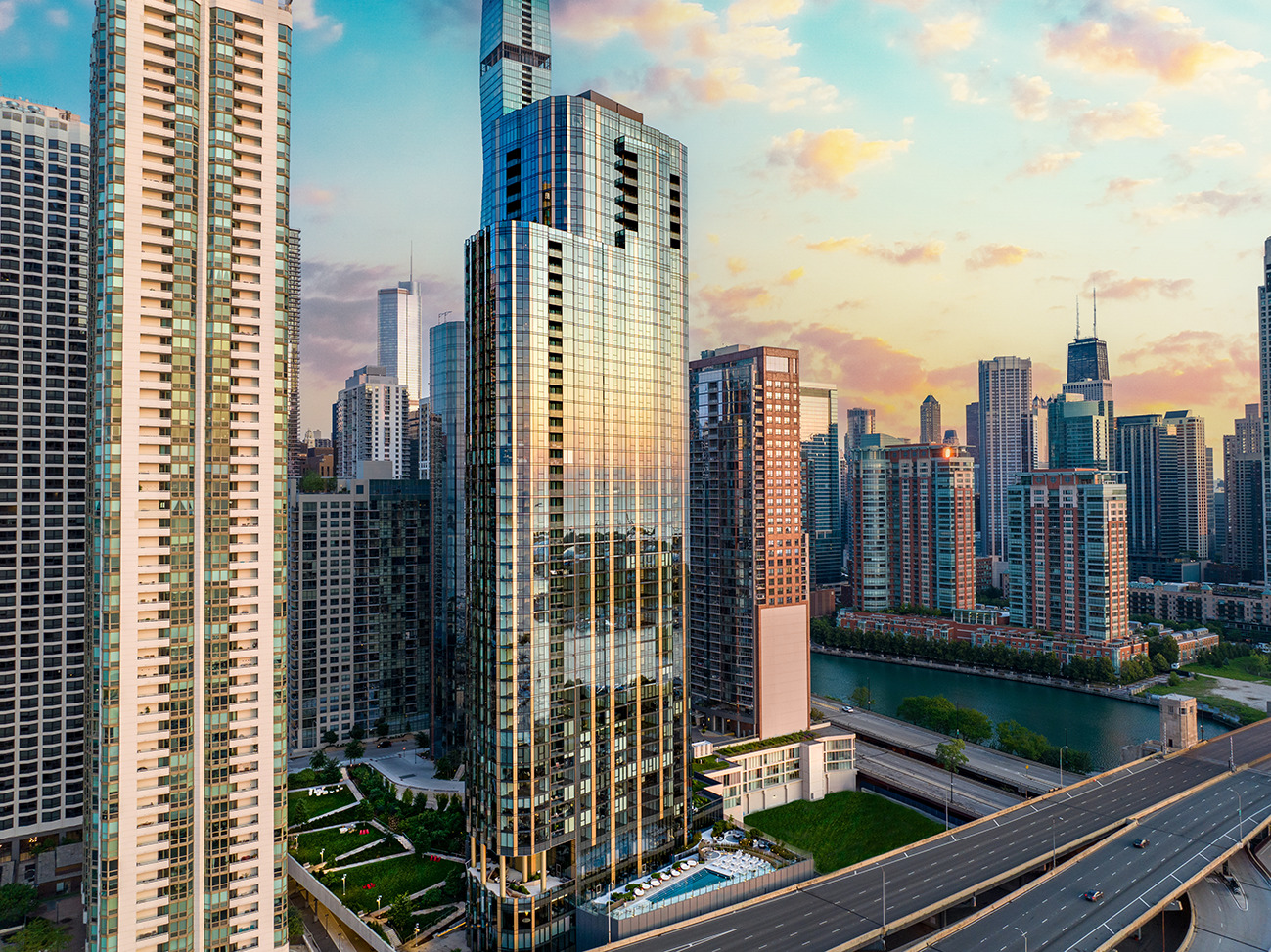
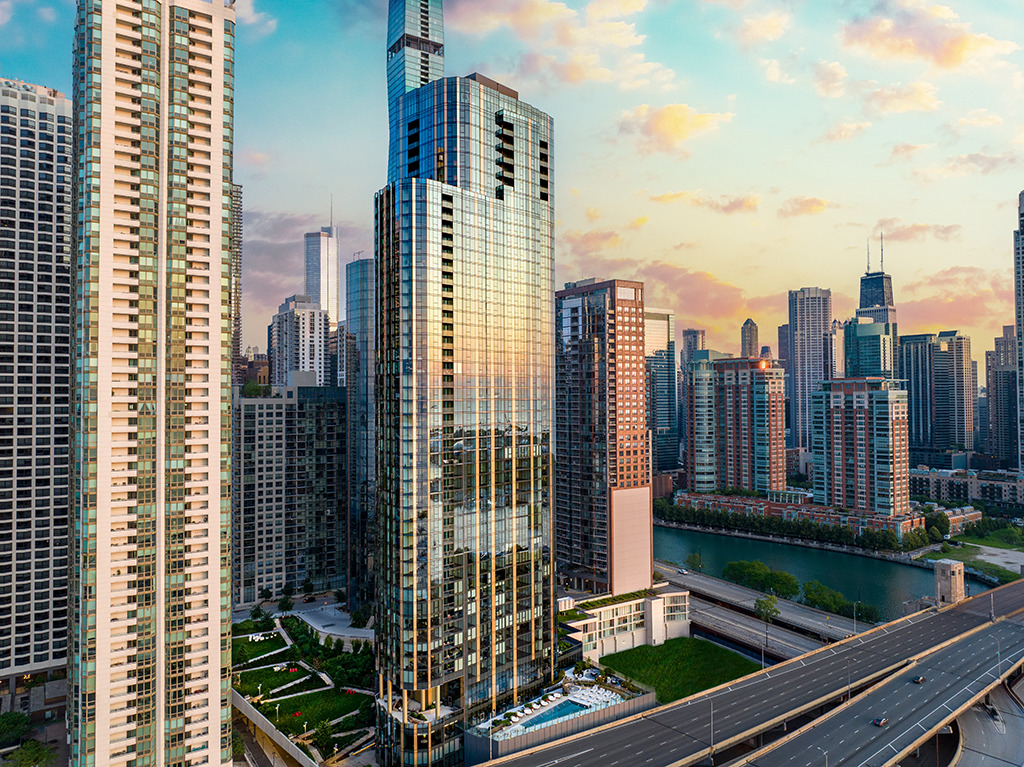
11,822 people live in New East Side, where the median age is 30 and the average individual income is $111,760. Data provided by the U.S. Census Bureau.
Total Population
Median Age
Population Density Population Density This is the number of people per square mile in a neighborhood.
Average individual Income
New East Side is the strangest and most misunderstood residential pocket in downtown Chicago. It is sixty-odd acres of tower, park, and deck built on air rights over a former railyard — a place where the sidewalk you're standing on may be three stories above the ground, and where residents can buy groceries, drop kids at school, and catch a train to Hyde Park without ever stepping outside. If you're considering a condo here, the things that matter most are not the things that matter in Lincoln Park or Hinsdale. This guide covers what actually drives value, livability, and buyer regret in this specific neighborhood.
New East Side sits in the northeast corner of the Loop community area, boxed in by four hard edges: the main branch of the Chicago River to the north, DuSable Lake Shore Drive and Lake Michigan to the east, Randolph Street to the south, and North Michigan Avenue to the west.
On paper that makes it part of the Loop. In practice it functions as a separate village, and the separation is physical rather than sentimental. Michigan Avenue acts as a wall on the west side. The Drive and the river cut off the other three. Within those borders, the street grid runs on multiple stacked levels rather than a single plane, so there is no casual pedestrian continuity between New East Side and the Loop proper — you cross deliberately, at specific points.
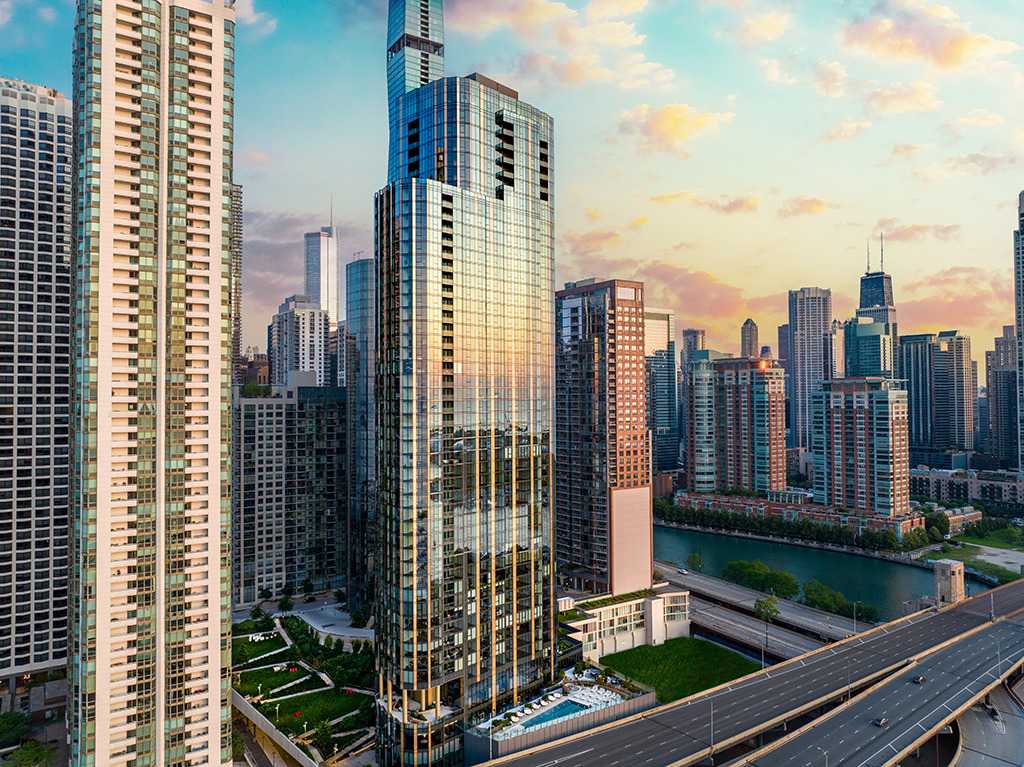
The result is a downtown address that feels nothing like downtown. Residents describe it as quiet, and they mean it literally: the Park at Lakeshore East sits below the surrounding street decks, and the ring of towers around it blocks traffic noise from both Michigan Avenue and the Drive.
Nearly every square foot of this neighborhood is engineered land, and understanding how it got here explains almost everything about how it functions today.
In the 1850s the Illinois Central Railroad laid track on trestles in Lake Michigan to reach its downtown terminus. Infill followed, and by the mid-twentieth century a sixty-acre freight yard separated the city from its own lakefront. The Prudential Building, completed in 1955, established the legal precedent that changed the trajectory of the whole area: developers could purchase air rights — the right to build above active rail — without owning the ground beneath.
That precedent made the 1969 Illinois Center master plan possible. Engineers poured a massive concrete deck over the working railyard and extended the street grid across it at elevated heights. That deck is the reason Columbus, Field, Stetson, and Wacker all have Upper, Middle, and Lower versions today. The early Illinois Center commercial towers along Michigan and Wacker went up on top of it.
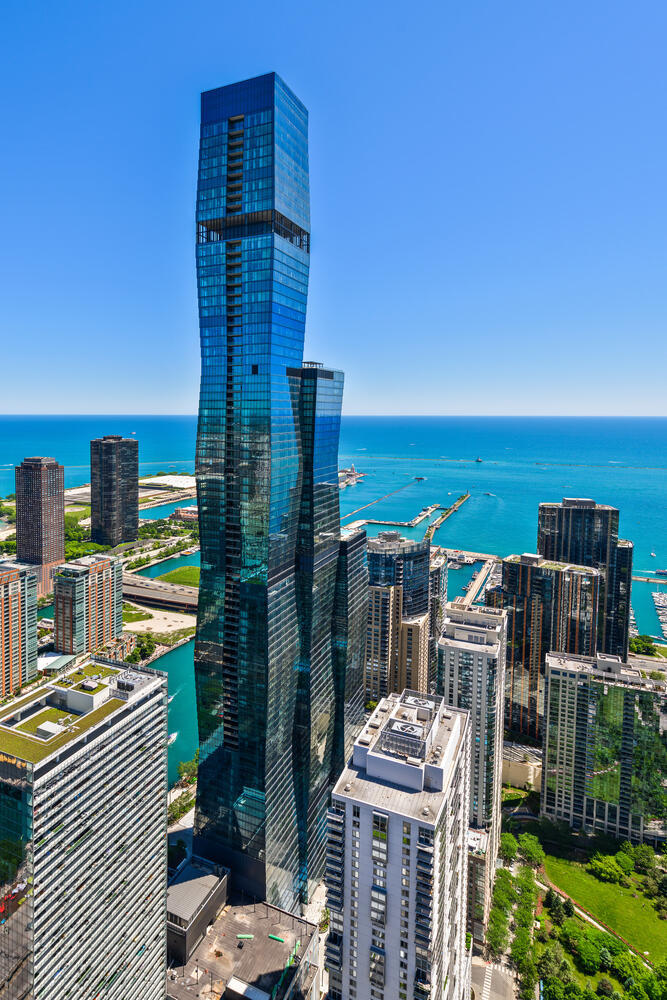
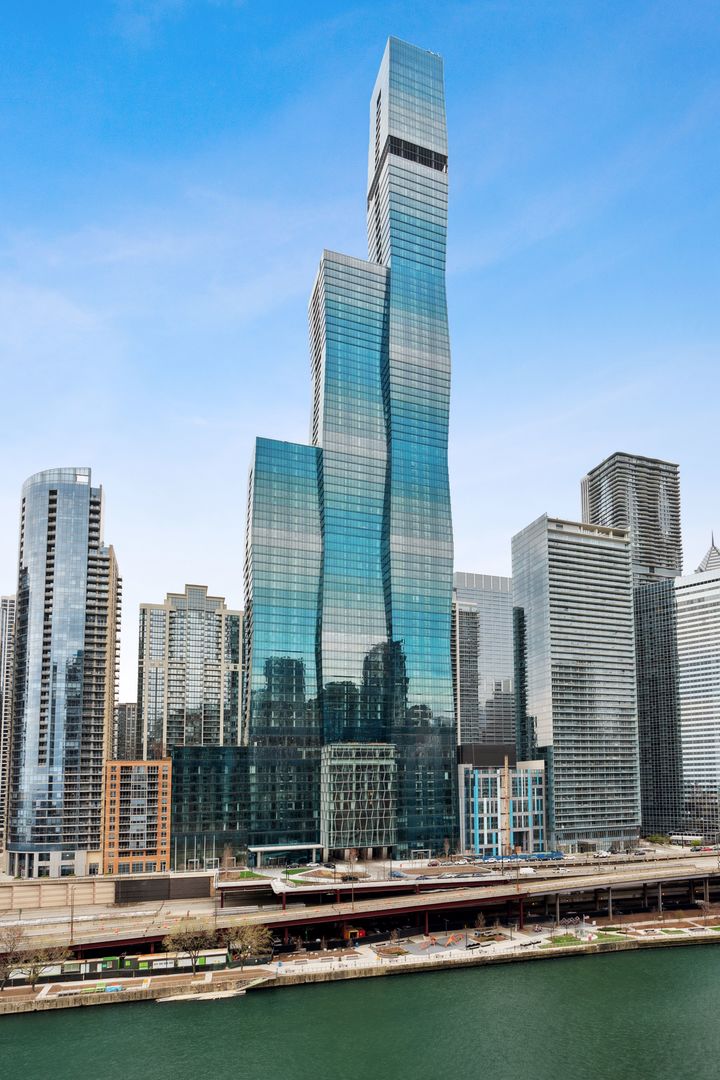
By the 1990s rail operations had consolidated and the eastern tracks came out, leaving a sunken twenty-eight-acre pit — the last large undeveloped parcel in downtown Chicago. Magellan Development Group acquired it and, beginning in 2001, executed the Lakeshore East master plan designed by Skidmore, Owings & Merrill: roughly $4 billion of high-density residential development organized around a six-acre public park. Studio Gang's Aqua Tower arrived in 2009, the St. Regis Chicago in 2020, and the neighborhood you see now was essentially complete.
This matters to buyers for a practical reason. A neighborhood built in three distinct waves — 1960s–80s pioneers, 2000s master-plan towers, and post-2015 ultra-luxury — produces three distinct condo products at three distinct price points inside a four-block radius.
This is the single biggest source of confusion for visitors, movers, delivery drivers, and new residents, and it's worth getting straight before your first showing.
The neighborhood's streets run on three stacked tiers. The upper level carries pedestrian traffic, retail frontage, building lobbies, and taxi and rideshare drop-offs — this is the "front door" layer. The middle level handles parking garage entrances, resident loading, and connector ramps between decks. The lower level is service infrastructure: freight docks, trash hauling, and through-traffic bypass, including Lower Wacker.
Two practical consequences follow. First, GPS is unreliable here. Satellite signal degrades on lower levels and elevation is frequently miscalculated, which is why rideshare drivers end up circling. When you request a pickup, specify "Upper" in the street name — Upper Columbus, Upper Wacker, Upper Randolph. Second, if you're moving in, your movers will be routed to a lower-level freight dock and a service elevator, not to the lobby you toured. Ask the management office for the loading dock address and reservation policy before you schedule the truck, not after.
Once you've internalized the system it stops being a problem and starts being an advantage — freight, garbage, and service traffic are all happening below you, out of sight.
The Park at Lakeshore East, designed by Sasaki Associates, is six acres of public green space and the functional town square of the neighborhood. It's the reason people who could live anywhere downtown choose this particular block.
The park sits below the surrounding street decks, which turns it into an acoustic bowl — noise from Michigan Avenue and the Drive passes over rather than through it. Towers ring the perimeter, most with direct stair, ramp, or elevator access down to park level, so for many residents the park is an extension of the lobby rather than a destination.
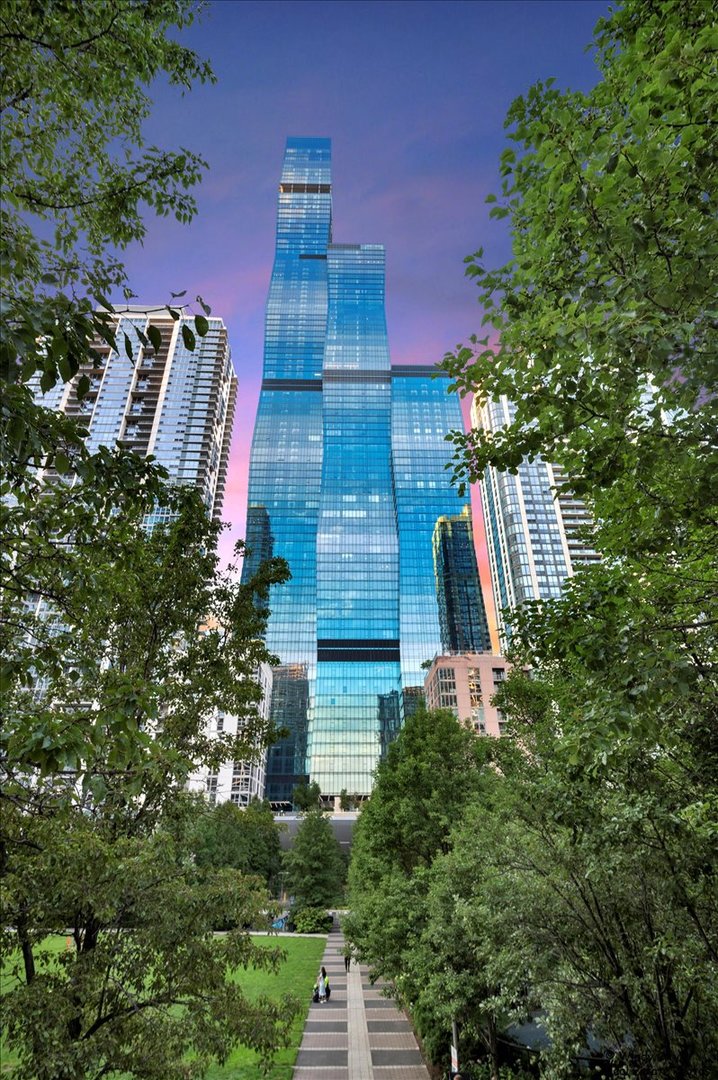
Inside it there's a central lawn, water features, walking paths, a fenced dog park, and children's play areas. The perimeter carries the neighborhood's everyday retail, including Mariano's. On a summer evening this is where the neighborhood actually is: dogs, strollers, people eating takeout on the lawn with the St. Regis behind them.
Buildings here sort cleanly into three generations, and the generation tells you most of what you need to know about layout, assessments, and price.
The pioneer towers (1963–1991) were built on the perimeter, well before Lakeshore East existed, and they offer the most square footage per dollar in the neighborhood. Outer Drive East (400 E. Randolph, 1963) is the original — famous for its glass-domed indoor pool and unusually generous floor plans. Harbor Point (155 N. Harbor, 1975) is the curved glass landmark on the lake, designed to maximize water views. North Harbor Tower (175 N. Harbor, 1988) uses triangular bay windows to angle views up the river and down the lakefront. Parkshore (195 N. Harbor, 1991) runs 56 stories on the eastern edge with full-service amenities. The Buckingham (360 E. Randolph, 1982) is the boutique option, 44 stories directly over Grant and Millennium Parks.
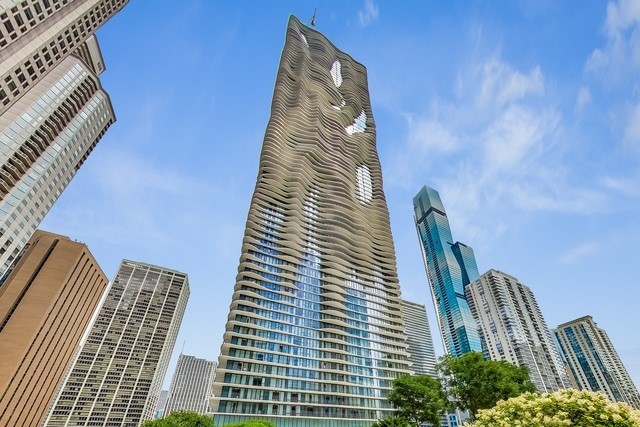
The Lakeshore East master-plan towers (2005–2009) introduced floor-to-ceiling glass, in-unit laundry, and modern amenity decks. 340 on the Park (2007) was the Midwest's first LEED Silver residential high-rise and has the cleanest sightline straight down Millennium Park. The Regatta (360 E. Ocean, 2006) curves along the riverbend with sweeping balconies. The Chandler (450 E. Waterside, 2008) sits at the corner where the river meets the lake. Aqua (225 N. Columbus, 2009) is Jeanne Gang's 82-story landmark with the undulating balconies — a hybrid building containing condos, apartments, and the Radisson Blu hotel, which is a meaningful distinction for buyers evaluating governance and amenity access. The Shoreham (2005) and Coast (2013) round out the phase as rental product.
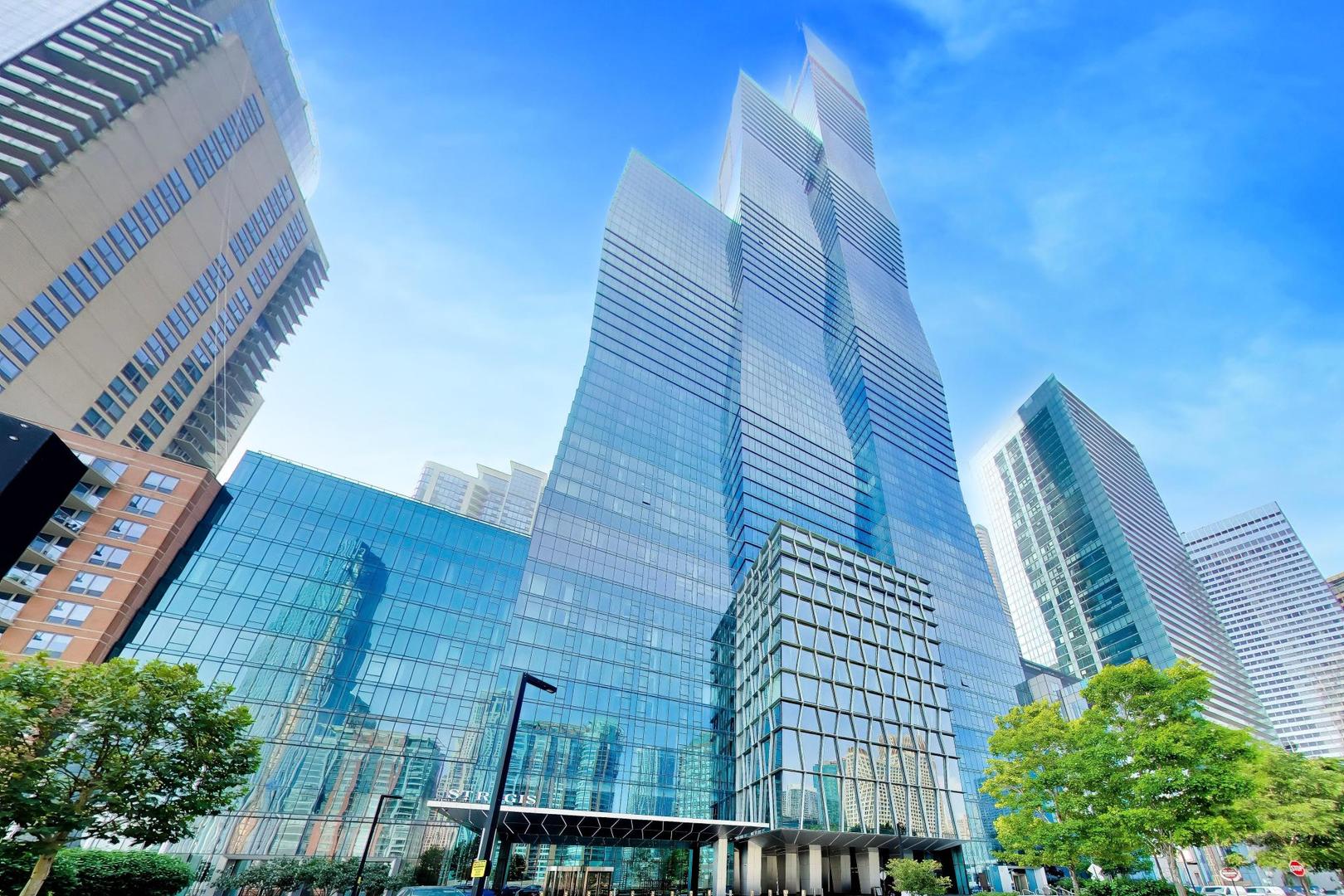
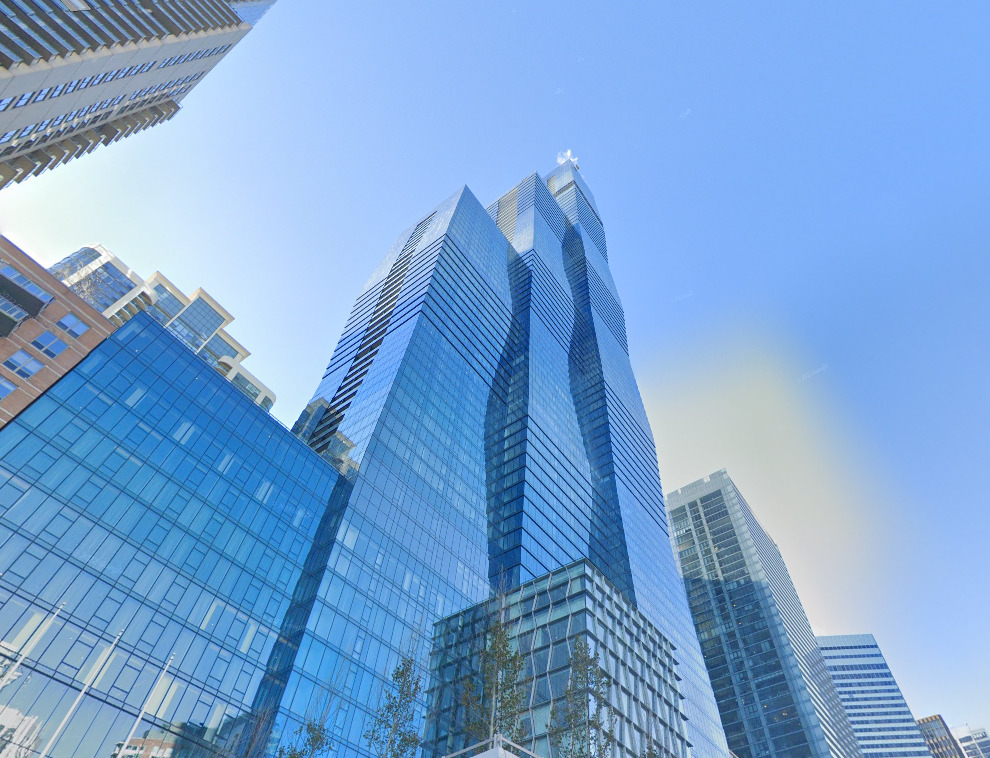
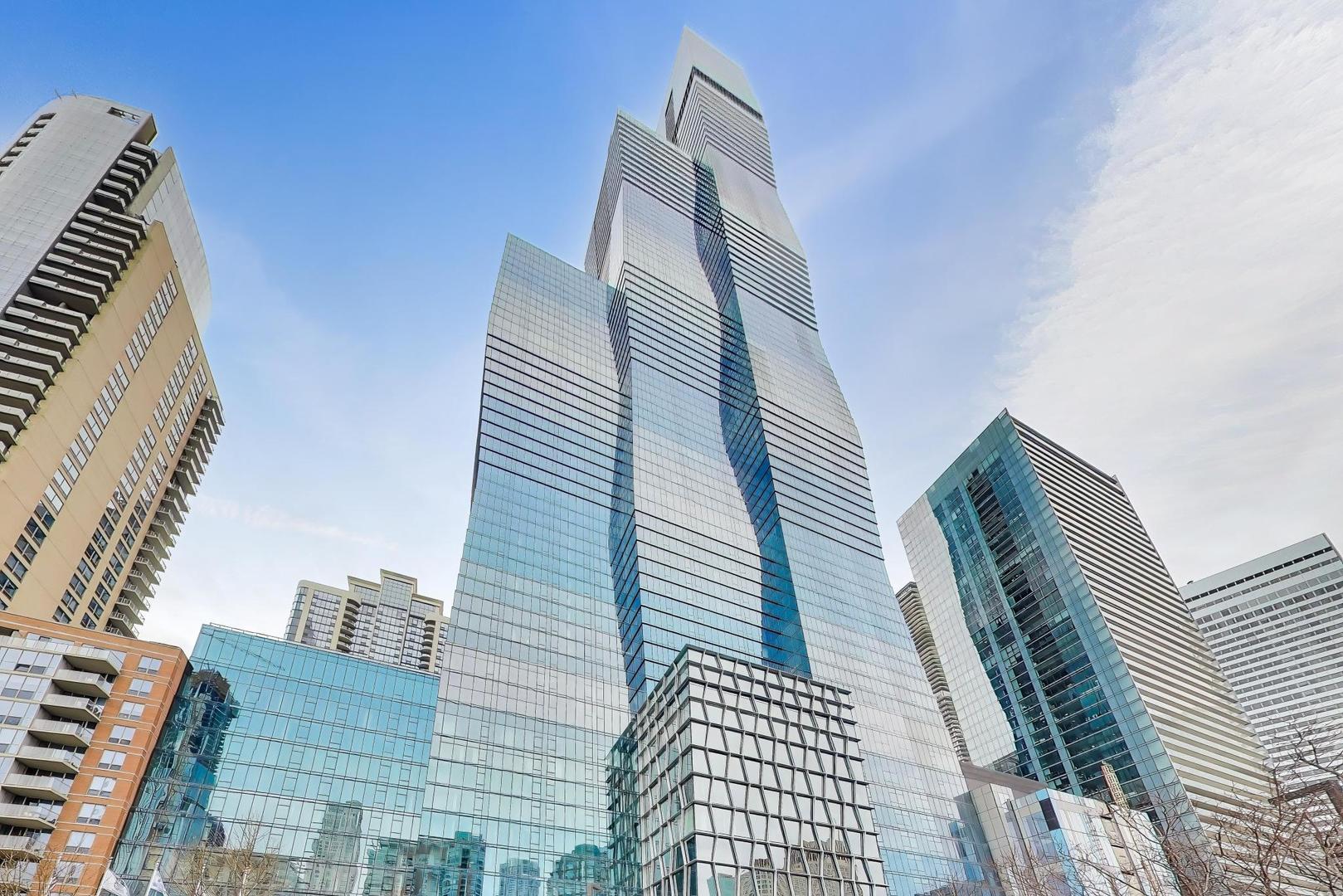
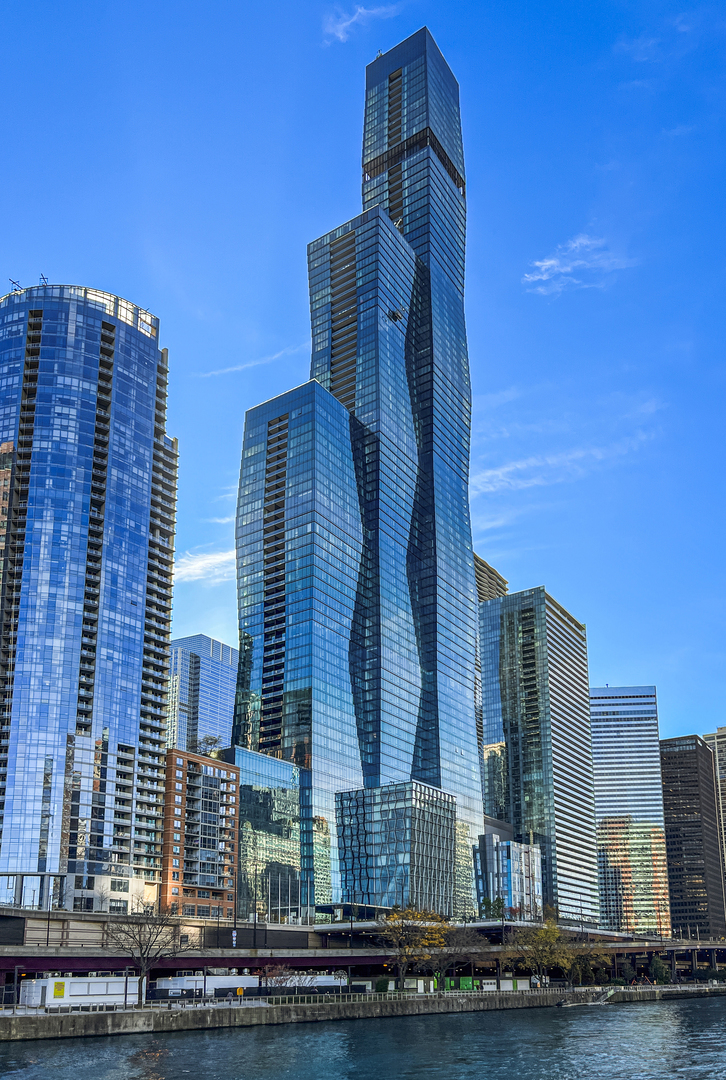
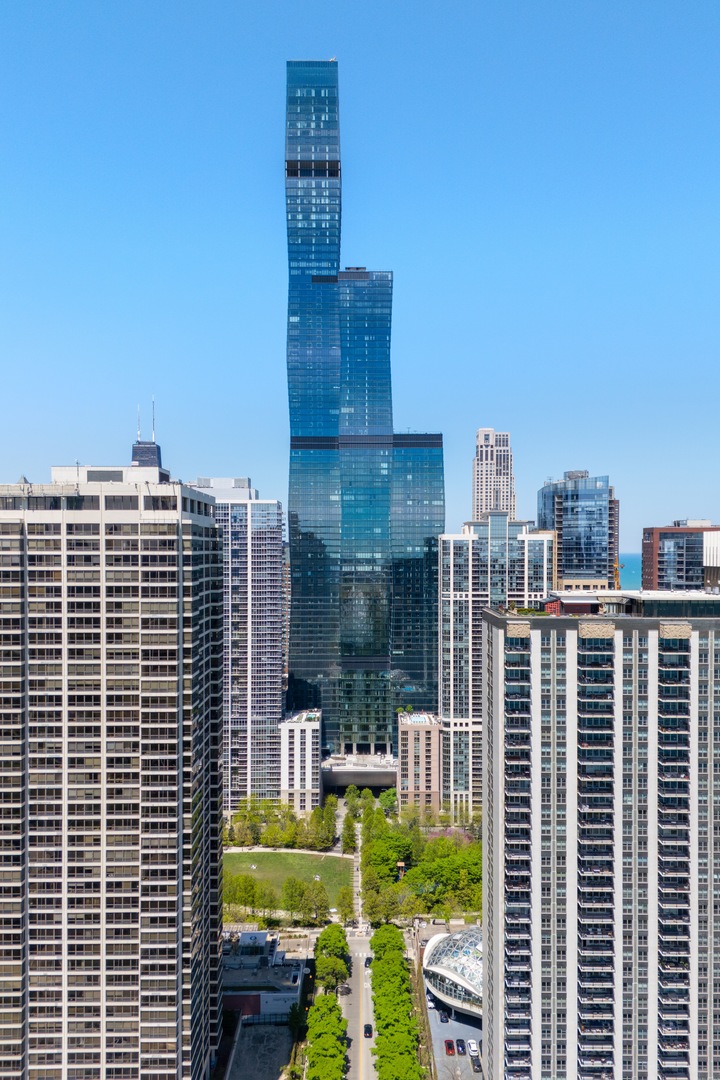
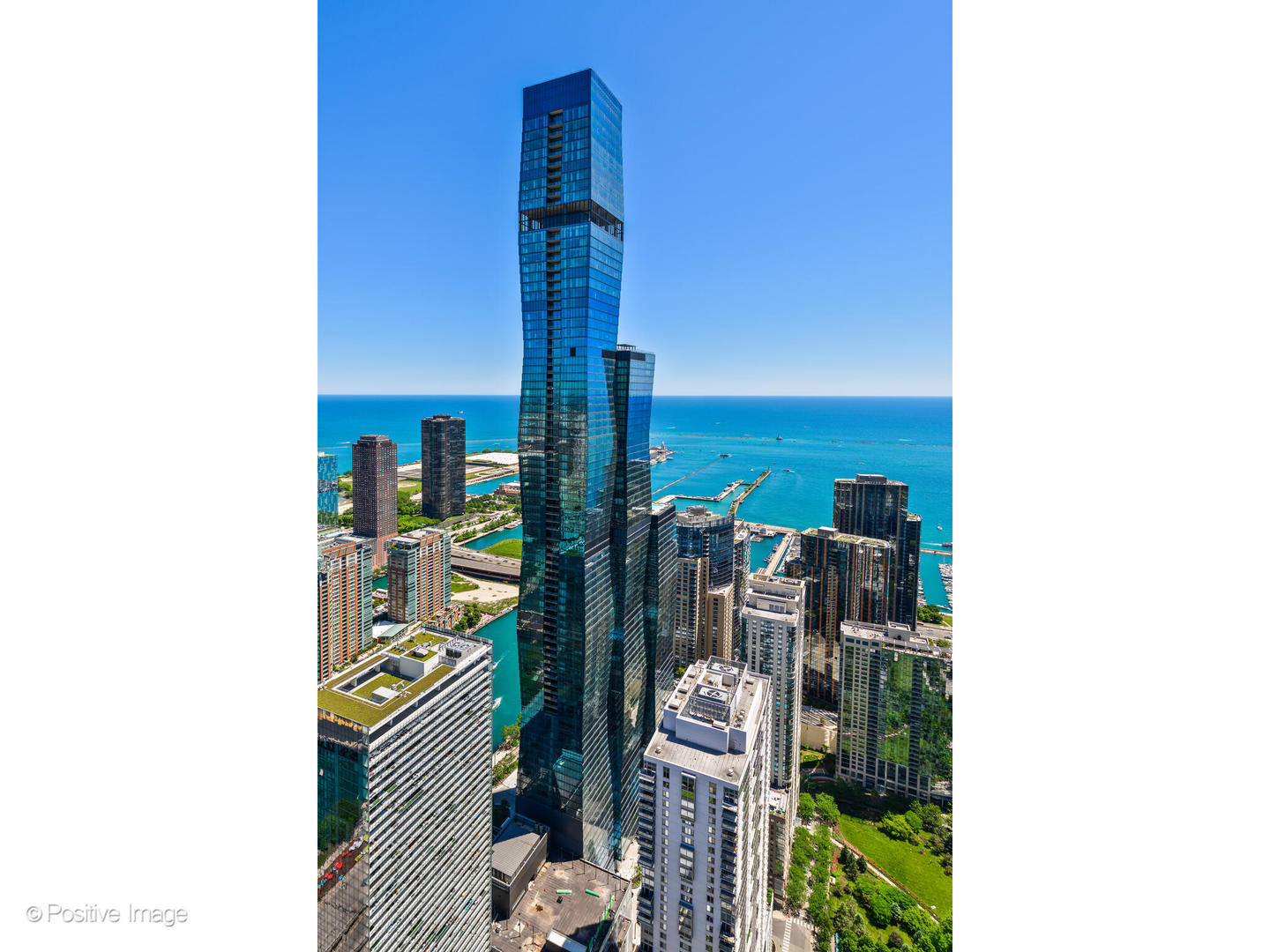
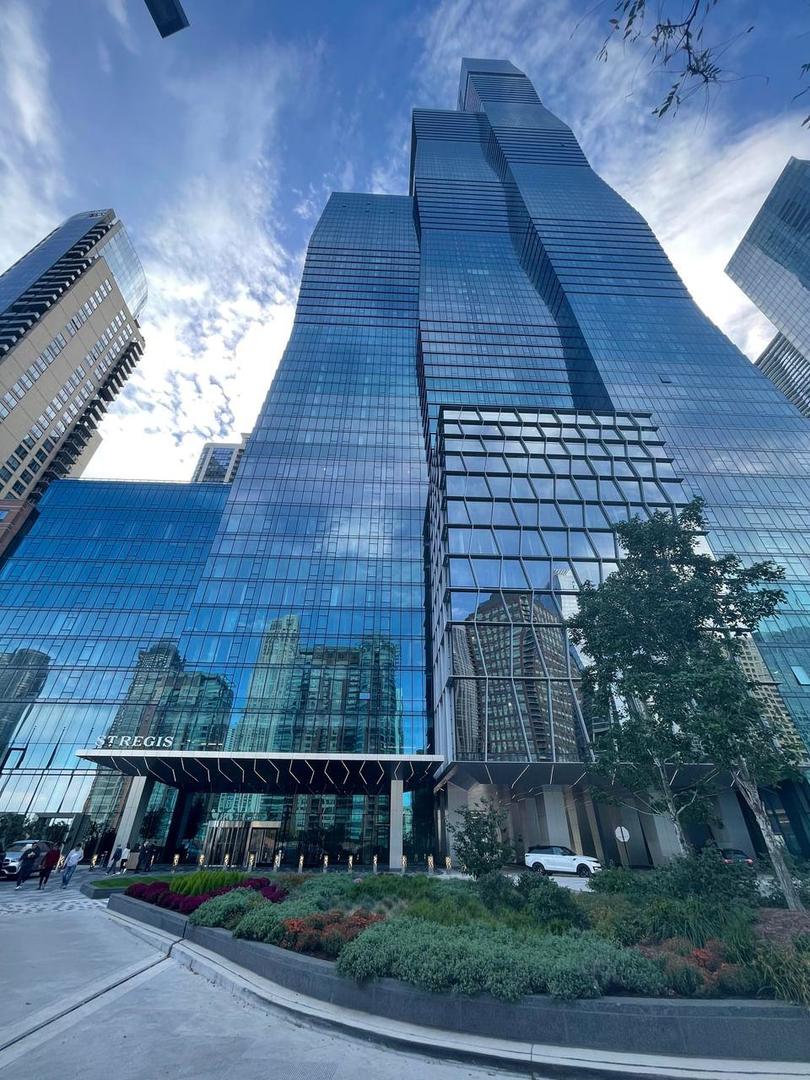
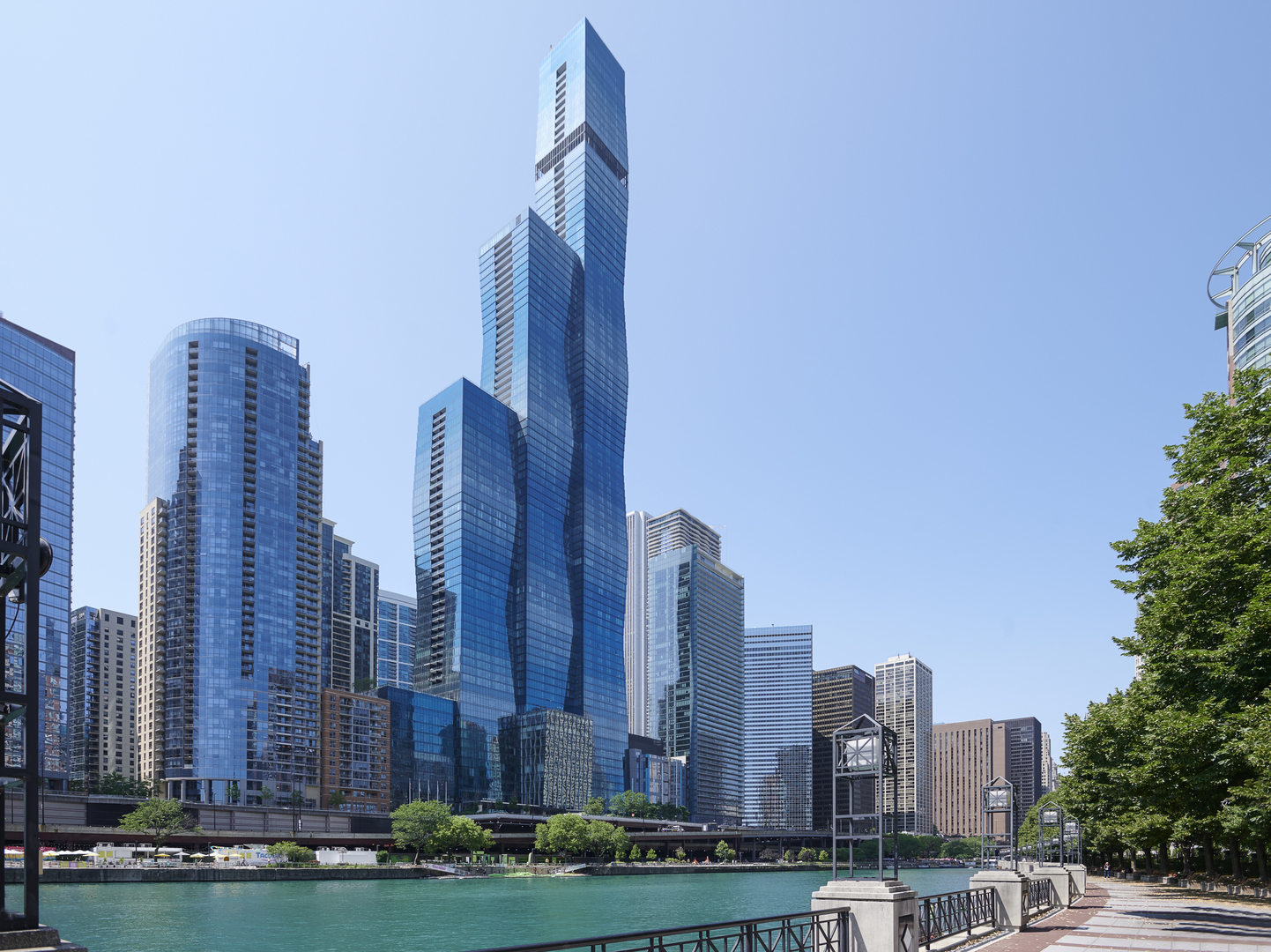
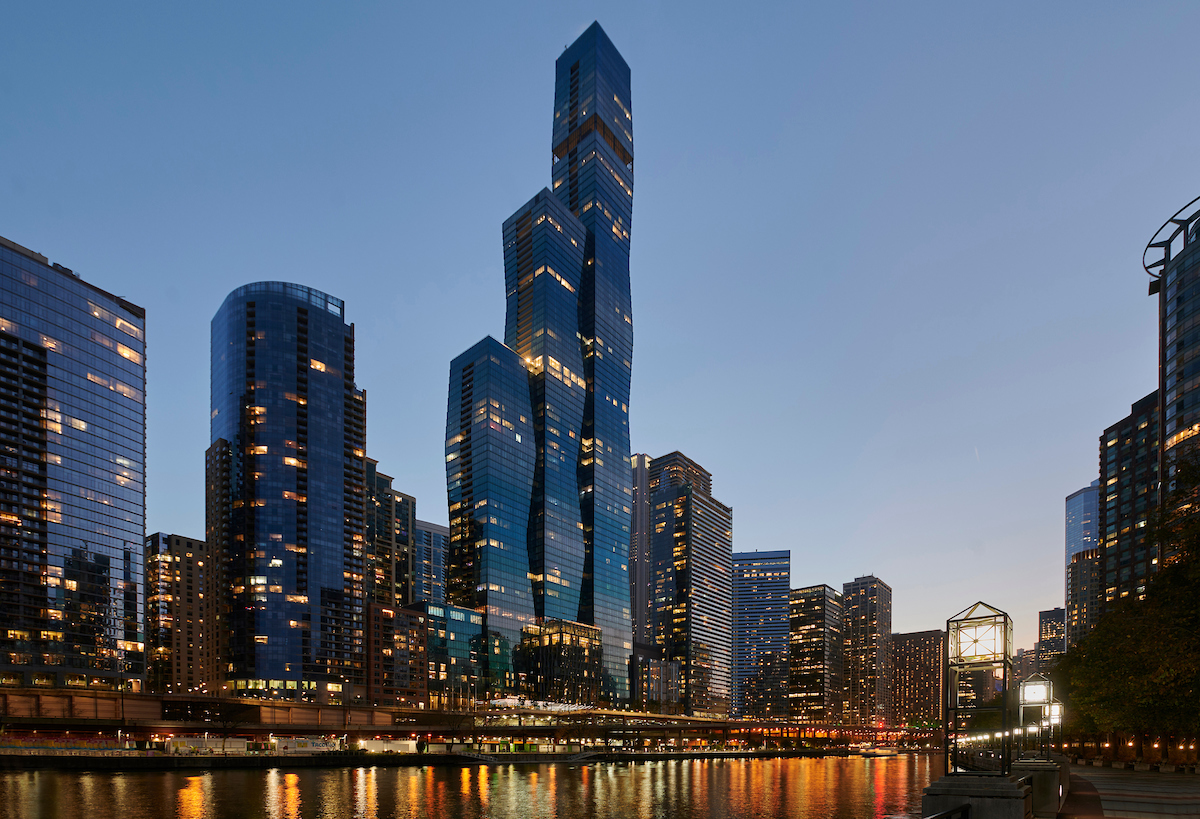
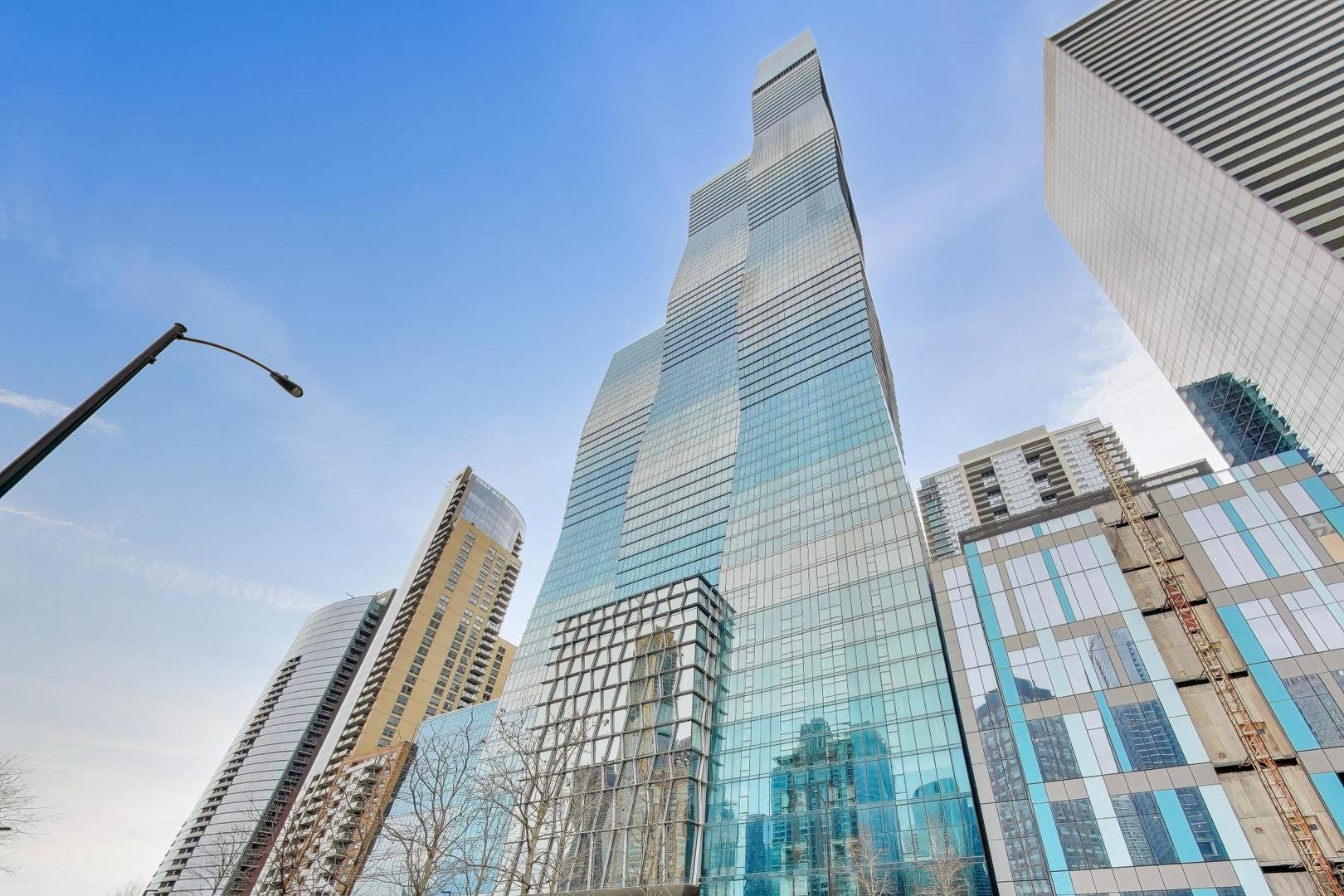
The modern era (2015–present) is where the ceiling moved. The St. Regis Chicago (363 E. Wacker, 2020) is Studio Gang's 101-story, three-frustum tower in blue-green glass — Chicago's third-tallest building, holding luxury condominiums above a five-star hotel. Cascade (455 E. Waterside, 2021) is the 37-story riverfront option with direct access to the park and the Lakefront Trail.
Pricing tracks building generation almost perfectly, which makes this an unusually legible market once you know the tiers.
Tier | Typical range | What you're buying |
|---|---|---|
Pioneer towers (1960s–80s) | roughly $250–$420/sq ft | Space and views for the money; older systems, higher assessments |
Lakeshore East (2000s) | roughly $450–$700/sq ft | Modern layouts, glass, in-unit laundry, steady resale demand |
Ultra-luxury (2015–present) | roughly $750–$1,300+/sq ft | Hotel-grade service, custom finishes, record Loop price points |
The practical read: a buyer with $400,000 can get a genuinely large two-bedroom with lake views in a 1970s tower, or a compact one-bedroom in a 2000s building. Neither is wrong — it depends entirely on whether you'd rather pay for space or for lower carrying costs and newer mechanicals.
View premiums are real and they stack on top of tier pricing. South-facing units over Grant and Millennium Parks carry the strongest and most durable premium, because those sightlines are protected from future construction — nothing is getting built in Millennium Park. East-facing lake views come next, with the caveat that lower floors sit closer to Drive noise. North river views are popular for the cityscape and the boat traffic, especially on mid-floors. Internal park views are quieter and cheaper; west-facing units price lowest because they look into downtown density.
One thing to watch that doesn't show up in comps: a "protected" view here is only as protected as the parcel across from it. Ask specifically what is entitled but unbuilt nearby before paying a premium for a sightline.
Running a full-service high-rise is expensive, and New East Side assessments reflect that. Expect roughly $0.90–$1.25+ per square foot monthly in the mid-century towers, $0.65–$0.85 in the 2000s master-plan buildings, and $1.00–$1.40+ in the ultra-luxury tier.
The headline number is misleading on its own, because older towers bundle far more into it. Buildings like Outer Drive East and Harbor Point frequently include central heating and cooling, water, high-speed internet, and cable in the assessment — owners in those buildings may see an electric bill of a few dollars a month. A $900 assessment that covers your heat, AC, water, and internet is not comparable to a $700 assessment that covers none of them. Always normalize before you compare.
When the §22.1 disclosure packet arrives, three things deserve your attention above everything else:
Reserve funding. Compare the actual reserve balance against the most recent independent reserve study, not against a percentage rule of thumb. High-rises face genuinely large capital events — elevator modernization, plumbing riser replacement, roof and garage membrane work — and a tower that's underfunded going into one of those is a tower that special-assesses.
Façade and balcony condition. Buildings over 80 feet are subject to Chicago's exterior wall inspection requirements, and concrete-forward towers can face multi-million-dollar repair programs. Ask for the most recent inspection report and the associated engineer's recommendations, not just the summary.
Board minutes, 24 months back. This is where pending special assessments live before they become official. Read them.
Parking is treated three different ways in this neighborhood, and the difference affects your financing, your taxes, and your resale.
Deeded spaces are separate real estate with their own PIN and property tax bill. They're common in the 2000s towers — 340 on the Park, The Regatta, The Chandler — and typically sell for $30,000 to $50,000 or more, with a small additional monthly assessment attached. You can buy one, sell one, and in some cases sell it separately from the unit.
Leased spaces are the norm in hotel-hybrid and rental-heavy buildings like Aqua and the St. Regis, and in older towers where a commercial vendor runs the garage. You pay roughly $275 to $450 a month, indefinitely, and you own nothing.
Limited common element spaces are owned by the association but assigned exclusively to your unit and transferred automatically with the sale. You can't sell one off separately.
The distinction matters most at resale. A deeded space is an asset you can price into the listing. A leased space is a recurring expense a future buyer will discount for. Confirm which one you're getting in writing — listing sheets get this wrong regularly.
Storage is more straightforward: most buildings from the 1960s through the 2000s assign a basement or podium locker as a limited common element. In the newest ultra-luxury towers, larger storage rooms are often sold or leased separately.
Here's the fact that surprises most buyers: there is no CTA "L" stop inside New East Side. For a neighborhood in the middle of downtown, that's unusual, and it shapes daily life.
What the neighborhood has instead is exceptional indoor and regional connectivity. Millennium Station, underground at Randolph and Michigan on the southwest edge, is the terminus for the Metra Electric Line (fast service to Hyde Park, the University of Chicago, and the south suburbs) and the South Shore Line (through Northwest Indiana to South Bend). For commuters on either of those lines, this is one of the best-positioned neighborhoods in the city.
The Chicago Pedway connects many buildings here — including Aqua, 340 on the Park, and 200 North Columbus — into a climate-controlled tunnel network reaching Millennium Station, Loop office towers, and CTA platforms. In February, that's not a novelty; it's the difference between a pleasant commute and a miserable one.
For rapid transit, the nearest stations are Washington/Wabash (Brown, Green, Orange, Pink, Purple) and Lake (Red Line), three to five blocks west across Michigan Avenue. Surface buses including the #60 and #124 run through Upper Columbus, Upper Wacker, and Randolph, linking to Union Station and Ogilvie. Drivers get direct DuSable Lake Shore Drive access at Randolph and at Wacker — roughly fifteen minutes to Lincoln Park or Hyde Park off-peak.
If your commute depends on stepping onto the Red or Blue Line, factor in that walk honestly before you buy.
The recreational footprint around New East Side is the best in Chicago, and it's the main reason people accept the neighborhood's quirks.
Maggie Daley Park is directly south across Randolph — twenty acres with a quarter-mile ice-skating ribbon, forty-foot climbing walls, tennis and pickleball courts, and a three-acre play garden. The BP Bridge carries you from there into Millennium Park, which functions as the neighborhood's front lawn: Pritzker Pavilion concerts, Cloud Gate, Crown Fountain, and the Lurie Garden.
North along Wacker, the Chicago Riverwalk runs 1.25 miles west from the lake, lined with outdoor dining, wine bars, and kayak rentals. East across the Drive, DuSable Harbor offers more than 800 slips and serves as the entry point to the 18-mile Lakefront Trail.
Practically, this means a resident can run, bike, skate, sail, or walk a dog along the water without ever crossing a busy intersection at grade. For active buyers and dog owners, nothing else downtown competes.
Day-to-day life here is unusually self-contained. Mariano's on Benton Place, on the park perimeter, is the neighborhood grocery — multi-level, with a pharmacy, hot bars, and a wine bar. The Village Market retail strip along the park covers the rest of routine life: casual dining, coffee, dry cleaning, dental, and salon services. A resident can go a full week without leaving the enclave.
For families, the neighborhood falls within Ogden International School boundaries for CPS elementary, with upper-grade campuses nearby. GEMS World Academy operates a private international school within walking distance. Verify current attendance boundaries directly with CPS before making a decision — they change, and the boundary lines downtown are narrower than people assume.
What residents still cross Michigan Avenue for is nightlife and specialty retail. There's good dining inside the enclave, including at the St. Regis, but destination restaurants, theater, live music, and late-night options are west in the Loop, River North, and Fulton Market. There's also no big-box retail here — Target, Home Depot, and boutique shopping all mean a walk or short ride west or north.
This neighborhood fits you well if: you work in the Loop, Aon Center, or Prudential Plaza and want a sub-ten-minute commute that can be done entirely indoors. If you're an in-town or second-home buyer who wants true lock-and-leave — 24-hour door staff, attached garage, no exterior maintenance, and Millennium Park at the doorstep. If you commute on Metra Electric or the South Shore Line. If you're an active urbanite or a dog owner who wants the Lakefront Trail and a neighborhood dog park within a block.
Look elsewhere if: you want street life outside your door. New East Side is genuinely quiet at night, and buyers who want bars, music venues, and independent coffee shops on their corner consistently find it too subdued — Streeterville, River North, and the West Loop serve that better. Also reconsider if your daily routine depends on the L, or if you're allergic to HOA costs. Assessments here are high by necessity, not by mismanagement, and they won't get lower.
The honest summary: New East Side trades vibrancy for calm, and convenience-by-car for convenience-by-tunnel. Buyers who understand that trade before they make it are almost always happy. Buyers who discover it after closing are the ones who list again in two years.
Buying in New East Side rewards people who know the buildings from the inside. The difference between a deeded and a leased parking space, a tower carrying a pending façade assessment and one that just finished its work, a protected south view and one with an entitled parcel across the street — these are the details that move a purchase by tens of thousands of dollars, and none of them appear on a listing sheet.
Second City Agents is a team of twelve Chicago brokers, recognized as the #18 large team in Chicago by Real Trends in 2024, with nearly $90 million in closed 2025 sales. We work across the city and the western suburbs, and downtown condo transactions — with their disclosure packets, reserve studies, and building-specific quirks — are core to what we do every week.
Whether you're evaluating a mid-century tower with panoramic lake views, an ultra-luxury residence in an architectural landmark, or you're a New East Side owner trying to price a unit correctly against a moving comp set, we'd like to help. Reach out to Second City Agents to schedule a tour, review current inventory, or get a custom valuation on your downtown condo.
New East Side has 6,833 households, with an average household size of 1. Data provided by the U.S. Census Bureau. Here’s what the people living in New East Side do for work — and how long it takes them to get there. Data provided by the U.S. Census Bureau. 11,822 people call New East Side home. The population density is 76,256 and the largest age group is Data provided by the U.S. Census Bureau.
Total Population
Population Density Population Density This is the number of people per square mile in a neighborhood.
Median Age
Men vs Women
Population by Age Group
0-9 Years
10-17 Years
18-24 Years
25-64 Years
65-74 Years
75+ Years
Education Level
Total Households
Average Household Size
Average individual Income
Households with Children
With Children:
Without Children:
Marital Status
Blue vs White Collar Workers
Blue Collar:
White Collar:
There's plenty to do around New East Side, including shopping, dining, nightlife, parks, and more. Data provided by Walk Score and Yelp.
Explore popular things to do in the area, including Marla's Mandel Bread, Fast Company, and Firefly Run.
| Name | Category | Distance | Reviews |
Ratings by
Yelp
|
|---|---|---|---|---|
| Dining · $$ | 0.16 miles | 1 review | 5/5 stars | |
| Shopping | 0.3 miles | 0 reviews | 0/5 stars | |
| Active | 0.16 miles | 3 reviews | 3.3/5 stars | |
| Active | 0.16 miles | 4 reviews | 4.3/5 stars | |
| Active | 0.17 miles | 8 reviews | 3.9/5 stars | |
| Active | 0.18 miles | 0 reviews | 0/5 stars | |
| Beauty | 0.16 miles | 0 reviews | 0/5 stars | |
| Beauty | 0.16 miles | 0 reviews | 0/5 stars | |
| Beauty | 0.16 miles | 2 reviews | 5/5 stars | |
| Beauty | 0.16 miles | 1 review | 5/5 stars | |
| Beauty | 0.17 miles | 0 reviews | 0/5 stars | |
| Beauty | 0.17 miles | 0 reviews | 0/5 stars | |
| Beauty | 0.26 miles | 0 reviews | 0/5 stars | |
|
|
||||
|
|
||||
|
|
||||
|
|
||||
|
|
||||
|
|

Compass
1643 N Milwaukee Ave, 1st Floor
Chicago, IL 60647
Hinsdale Office
1 Grant Square
Hinsdale, IL 60521
Second City Agents